Monday, 28 September 2015

How to Build a $24 Million Ecommerce Company in 2 Years


Top Companies Are Far Outpacing Industry Growth

Ecommerce is expected to be a $2.5 trillion industry, and comprise close to 9% of total retail sales by 2018. However, the more impressive point is how the very top ecommerce companies are growing at a rate that dramatically outpaces this rapid industry-wide growth.
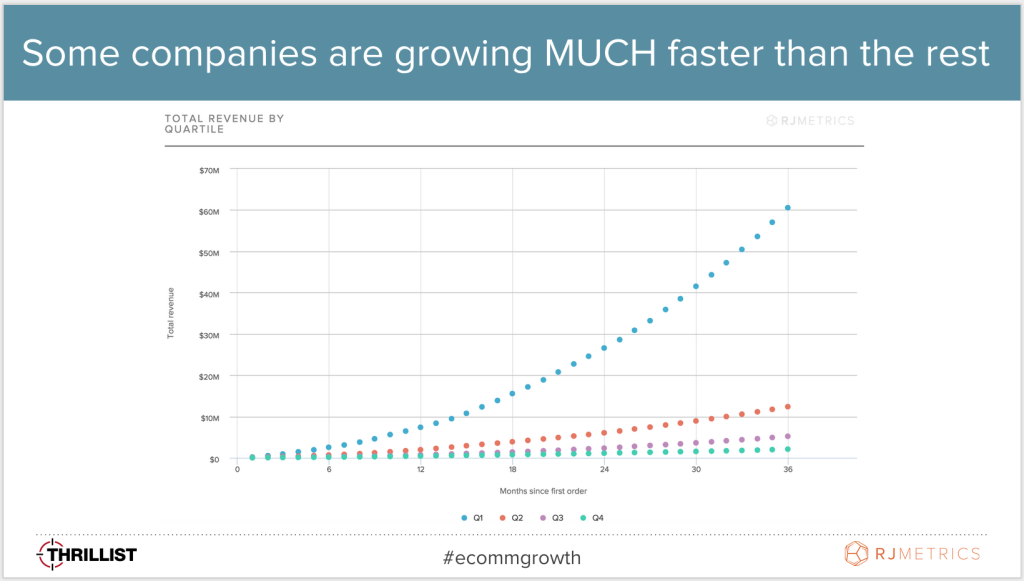
RJMetrics recently released its 2015 Ecommerce Growth Benchmark Report, based on cross-industry data from hundreds of ecommerce companies around the world. What we learned was that the top quartile of companies dramatically outperform the lower three quartiles:
Screen Shot 2015-03-06 at 1.00.17 PM
How do the top companies achieve this dramatic level of growth? We’ve identified three main growth drivers.

Three Main Drivers of Growth at Top Companies

Best-in-class ecommerce companies start with a product the market really wants, and then excel at acquisition and retention.

Growth Driver #1: Product/Market Fit

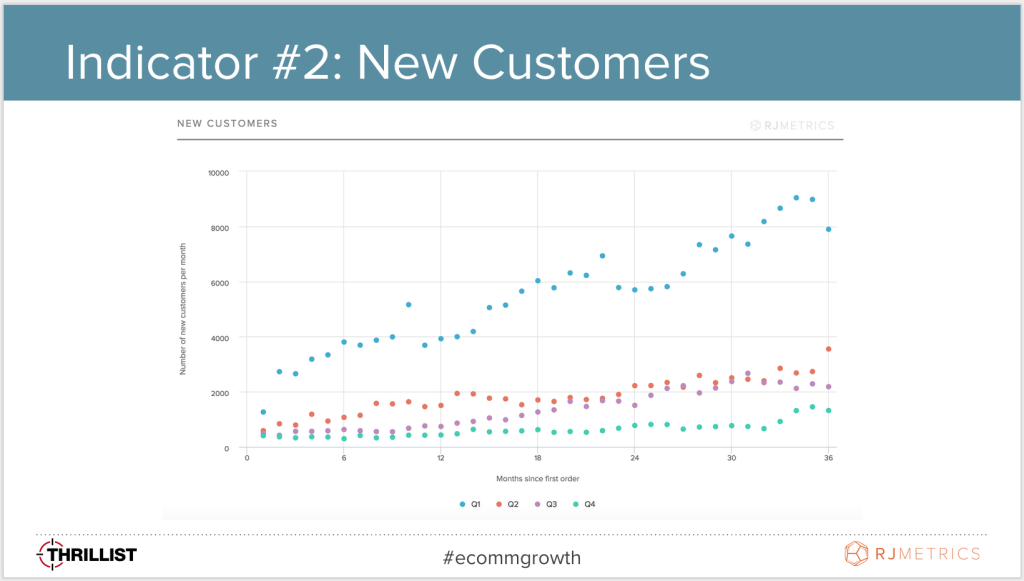
How do you know if you have something the market actually wants? In addition to accelerated revenue growth right out of the gate, companies with great product/market fit acquire customers dramatically faster.
Screen Shot 2015-03-06 at 1.02.26 PM
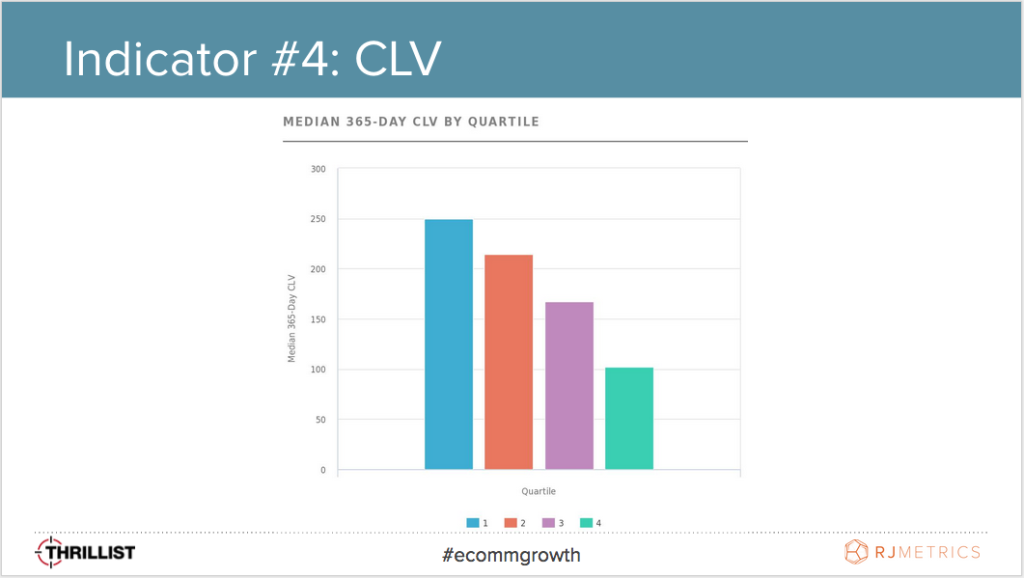
These companies also have a dramatically-higher number of orders, and most importantly, strikingly-higher customer loyalty:
Screen Shot 2015-03-06 at 8.57.53 AM
Top companies are simply acquiring more valuable customers, more quickly, than the lower quartiles.
What You Can’t Get Wrong

Make sure you lock down product/market fit from the get-go, and focus on making your brand customer-centric. Brands like Casper, Warby Parker, and BarkBox know their customers intimately and are super-focused on creating warm communities and frictionless buying experiences.

Growth Driver #2: Efficient Acquisition

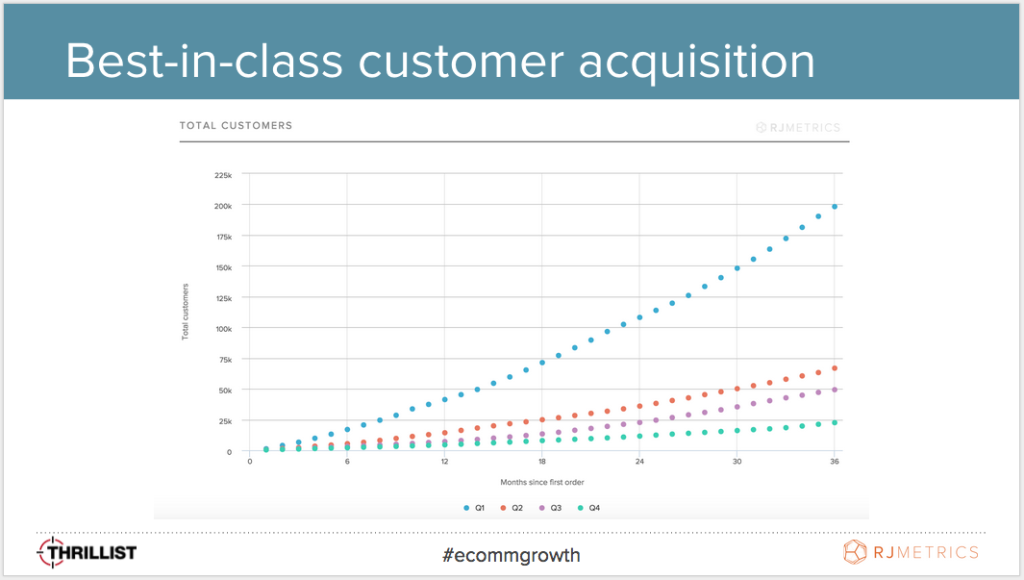
Best-in-class companies acquire customers at a much faster rate than other companies, and they keep doing it as they grow.
Screen Shot 2015-03-06 at 9.32.06 AM
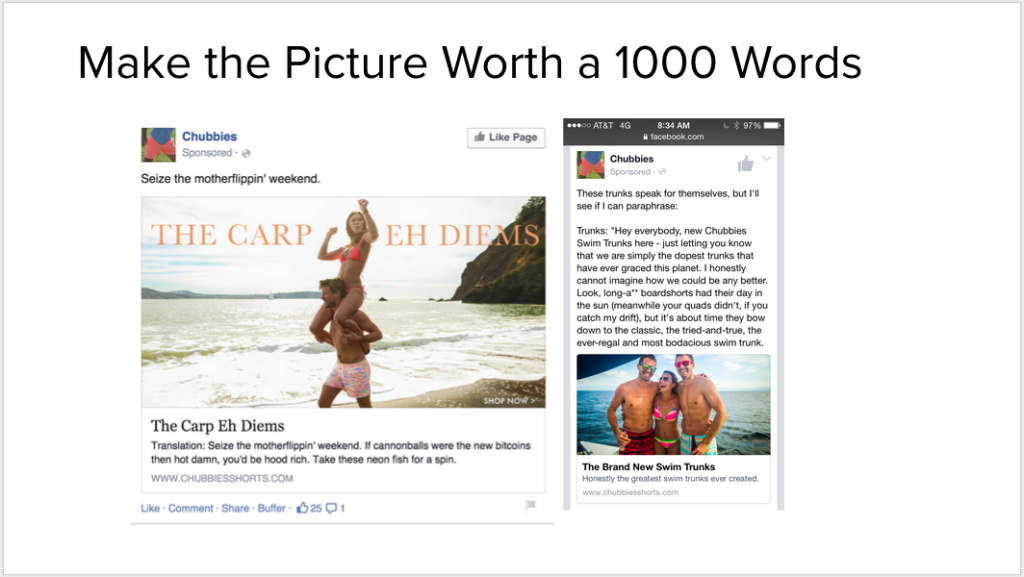
One strategy behind this rapid customer acquisition is reliance on increasingly-powerful ad platforms. Facebook, in particular, is a game-changer for the industry not only because of its rapidly-evolving targeting abilities, but also because its image focus allows companies to grab customers’ attention – particularly as the mobile audience grows.
Screen Shot 2015-03-06 at 9.36.21 AM

It used to be expensive and time-consuming to tell image-focused lifestyle stories, with companies spending millions of dollars on a campaign before knowing whether it was working.
Screen Shot 2015-03-06 at 9.42.32 AM
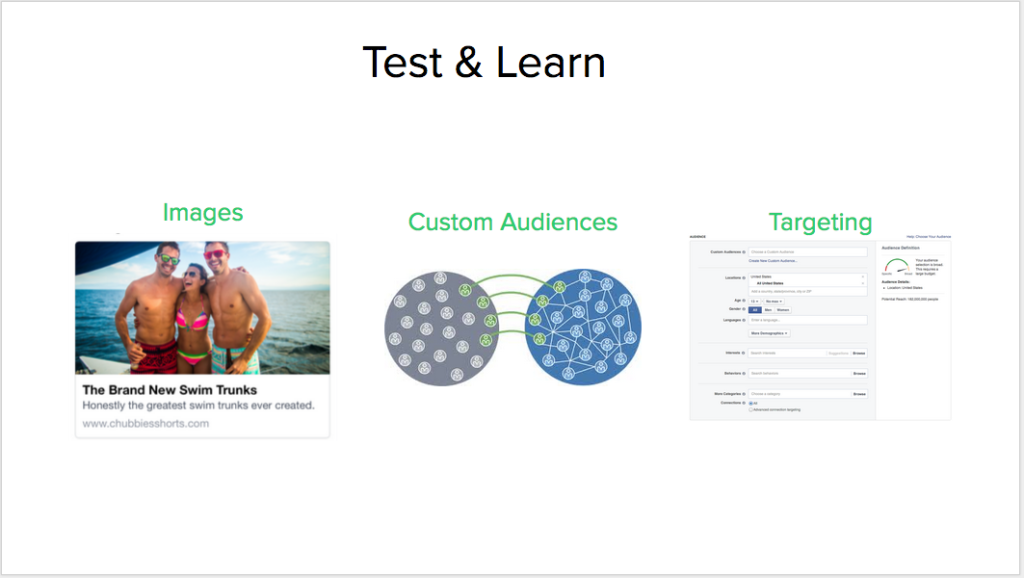
Now, top companies drop $1,000 on a campaign, and then quickly test and iterate to figure out how to acquire the best customers.

Growth Driver #3: Customer Retention

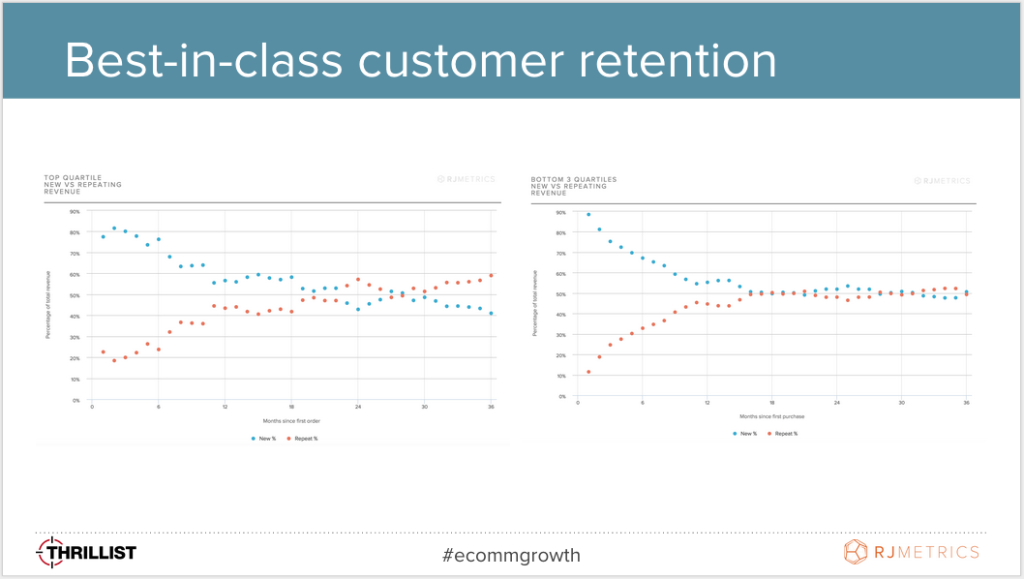
Best-in-class companies are also much better at getting customers to come back.
Screen Shot 2015-03-06 at 10.58.00 AM
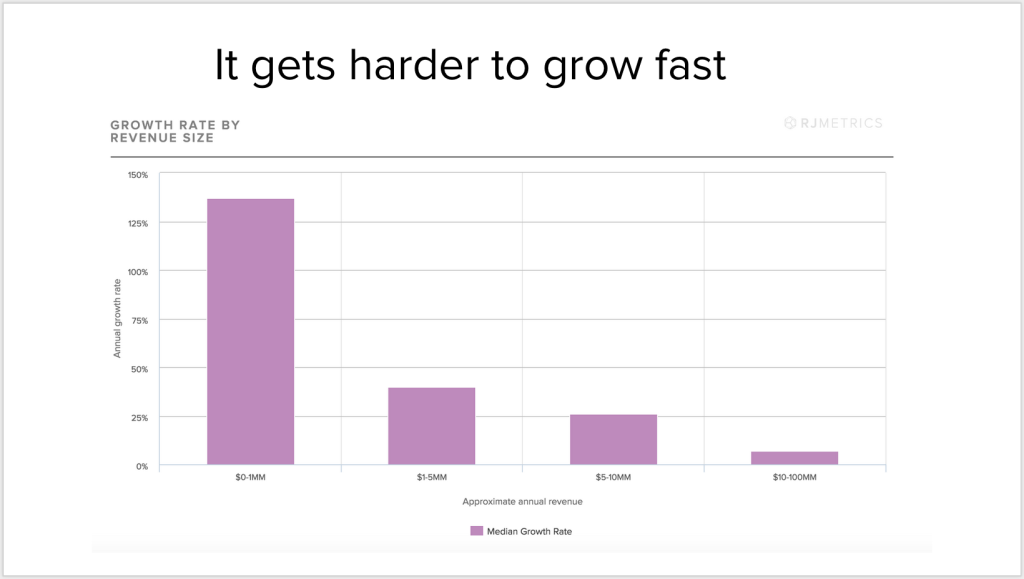
While growth rates inevitably slow as a company grows, the secret sauce for keeping your company growing at best-in-class rates is great customer retention.
Screen Shot 2015-03-06 at 1.09.07 PM
In the early days of fast customer acquisition, you may feel that you can afford to lose a few customers along the way. Don’t be fooled. Companies that rely heavily on acquisition for growth quickly find themselves in an expensive, leaky-bucket situation that makes it much harder to reach escape velocity.
How to Keep Your Customers Coming Back
Best in class companies often start niche, but are able to grow and scale without losing their core customer base.

They also keep their customers engaged by staying on top of the cultural conversation.
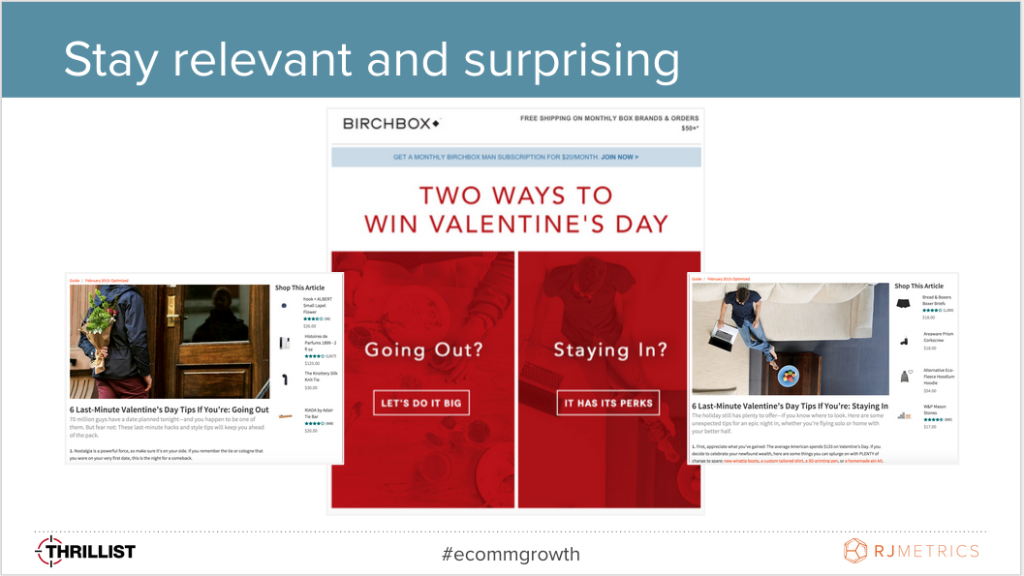
Screen Shot 2015-03-06 at 11.13.29 AM
And remembering that their customers appreciate a personalized experience, available to them through multiple touchpoints.
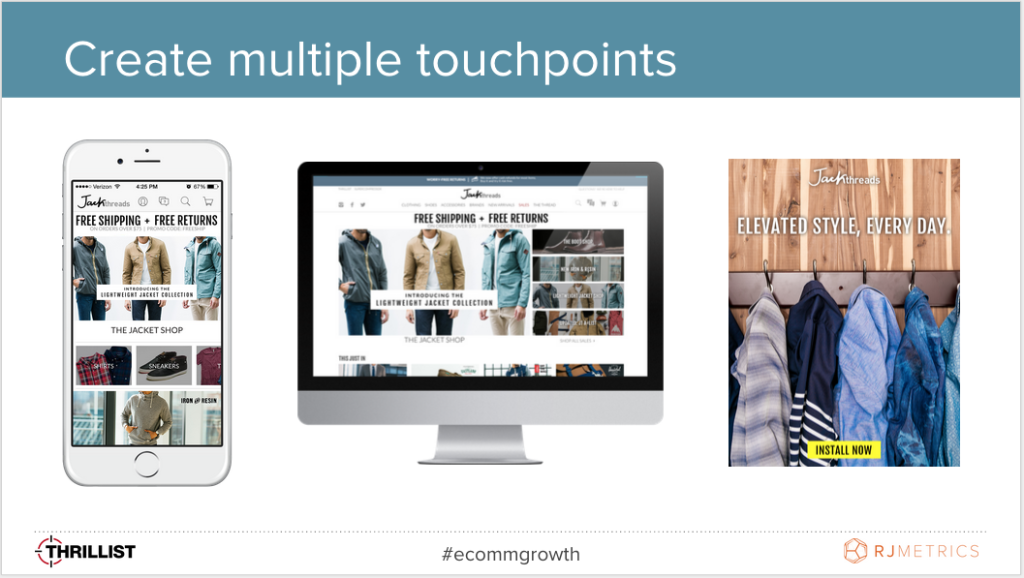
Screen Shot 2015-03-06 at 11.13.40 AM
Thrillist found that customers who engaged on multiple touchpoints – desktop, mobile, and mobile web – had a 64% higher LTV. And that brings us to…

The One KPI To Rule Them All

How do you combine the three growth drivers to get one key indicator to grow and improve your business?

Screen Shot 2015-03-06 at 11.19.55 AM
RJMetrics benchmark data shows that top performers generate more total orders per customer, with a higher AOV. Multiply those two metrics together, and you see the overall impact:
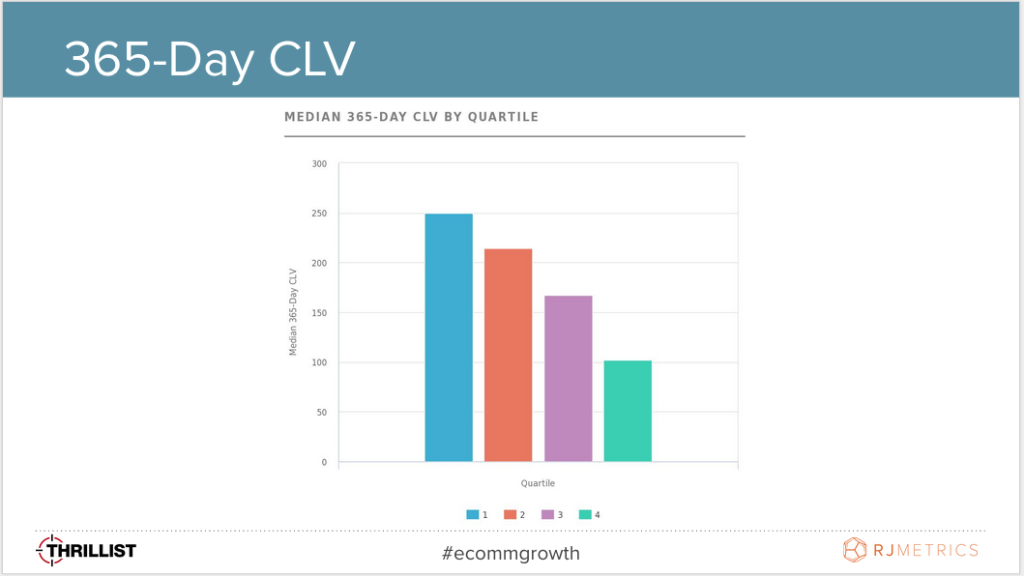
Screen Shot 2015-03-06 at 11.24.51 AM

How to Use CLV Proactively

You’ll get a very rich picture of what’s going on inside your business by using cohort analysis to see how your CLV is evolving and growing over time. Are you adding more quality customers? Are things getting better or worse?
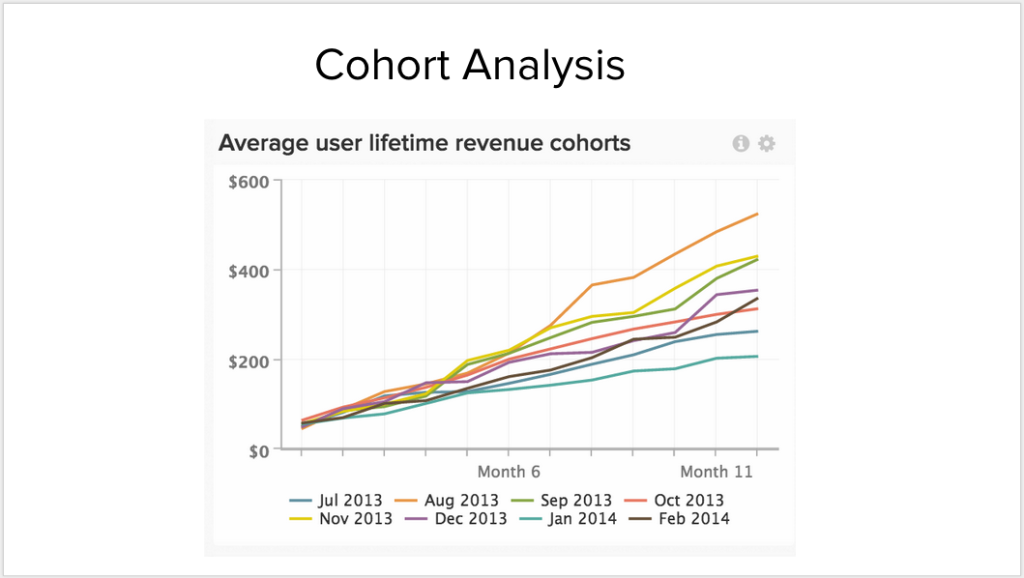
Screen Shot 2015-03-06 at 11.27.24 AM
Combining this information with ROI analysis of your marketing channels will help you make quick invest-or-kill decisions to make sure your marketing dollars are pulling in the best customers.
Screen Shot 2015-03-06 at 11.27.42 AM
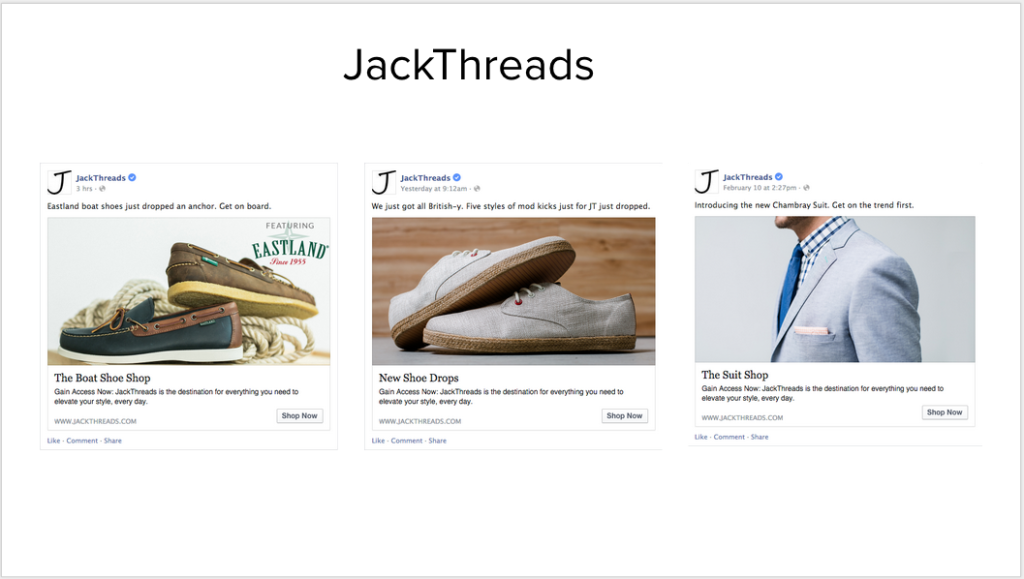
These analyses are core to JackThreads’ marketing strategy. They make quick decisions based on early quality indicators, tied back to acquisition source, allowing them to pull unsuccessful campaigns within days. This way, they never find out too late that they’ve acquired a bunch of customers who aren’t purchasing.

Using Data to Grow Smarter

Our presenters covered tons of information during this webinar. If you want to continue exploring some of the growth strategies they mentioned, here are some helpful links:

Friday, 25 September 2015

Market and sell overseas


Selling your product or service overseas is a demanding undertaking. You need to treat your overseas markets with as much care and attention as you do your home market. And each territory will have its own distinct sales and marketing challenges that you must address.
Choosing the most effective sales channel is a key decision for any business that exports. Whether selling directly, using agents or distributors, setting up a joint venture or striking a licensing deal, you need to think carefully about the advantages and disadvantages. Once the decision is made, you'll need to clarify your strategy with overseas partners, set targets and measure progress. Clear legal agreements are strongly recommended to protect everybody's interests.
At the same time, you will need to understand the local market and work with different customs and cultures. You may need to adapt your product to meet local requirements, and develop new promotional methods and messages. Simply fulfilling orders and providing quality customer service is likely to involve extra complications. But the right approachwill help you develop a whole new customer base, often with exciting growth prospects.

1 Plan your strategy

1.1 Base your decisions on the best possible information.

Investigate customers and their requirements, and what your competition is offering.
Find out what regulations you need to comply with.

1.2 Ensure that you understand the practical implications of trading overseas.

Consider how you will organise transport and other logistics, and whether you will use a freight forwarder to handle this for you.
Assess the impact of different payment methods and terms on your cashflow, and the risk of non-payment.

1.3 Set clear objectives.

Include targets that allow you to benchmark your progress. For example, sales volume or number of new customers.

1.4 Plan how to achieve your objectives.

Decide how you will distribute your product (see section 2).
Plan your promotional and sales activities (see section 4).

1.5 Involve overseas business partners.

If you work with agents, distributors, joint-venture partners or licensees, it's important to get them involved in forming your strategy and objectives. They will have a deeper knowledge of the local market.
Make sure that they understand your strategy and how you want to achieve it.

2 Select your sales channels

2.1 Consider selling direct.

You may be able to sell directly from the UK, for example through your website.
You could establish a local office to deal with sales, marketing, distribution and customer service in your target market. This will require significant up-front investment.
Selling direct gives you control all aspects of your sales and marketing. You will need in-depth market knowledge and local business contacts, and may face language and cultural barriers.

2.2 Consider using a distributor.

A distributor will usually buy from you and then be responsible for selling your product to their customers.
Using a distributor can provide the fastest route into your new market. However, you lose direct control of your sales, marketing and customer service.
Try to find a distributor that has experience of selling your type of product, an established customer base and a good reputation.

2.3 Consider using an agent.

An agent will act as your business' representative in the target market, selling and handling customer service on your behalf.
Using an agent is usually the lowest-cost route into a new market. You generally only pay commission on sales the agent makes.
You will usually have to invest in marketing support for the agent.

2.4 Consider a joint venture or licensing arrangement.

Creating a joint venture or licensing partnership will allow a local business to market and sell your product or service in the target market. An arrangement like this can include allowing your partner to manufacture your product locally.
You share the risk with your partner and have some degree of control over how your interests are served in your target market.
You will have to spend significant amounts of time choosing the right partner and reaching a detailed agreement to protect your interests.

3 Manage relationships with overseas partners

3.1 Make sure you have clear agreements with any business partners.

Agree what you want them to do. For example, you might want them to provide an agreed standard of customer service, as well as simply selling your products.
Agree any restrictions. For example, if they are limited to selling within a particular territory, or must promote your product in a way you specify.
Agree their rights. For example, as part of an exclusive distribution agreement.
Agree how long the agreement will last and how it can be terminated, including any compensation for termination.

3.2 Take legal advice on the key issues.

Key issues can include your potential liability if things go wrong, and ownership of intellectual property (such as brand names).
Terminating a relationship can be problematic. For example, within the EU a self-employed agent is likely to be entitled to significant compensation.
An experienced lawyer will know what needs to be addressed.
Draw up a written contract to protect both your interests.

3.3 Build the relationship.

Keep a regular dialogue with your overseas partners. Even if it is just a monthly call to find out about trading performance, it will help you to keep in touch with market developments.
It's a good idea to regularly ask about current market conditions, competitor activity and any feedback from customers and potential customers.
Check whether your business partner has any questions for you.
Regularly monitor their performance against your benchmarks. Look for the causes of any problems, and for opportunities to further grow sales together.

4 Promote and sell

4.1 Make sure you understand the local market.

Your marketing and promotion must reflect the preferences, buying habits and cultural influences of your customers in each market you sell to.
Local product requirements may be very different.
Bear in mind that business behaviour may be different overseas. For example, business people in France are often more formal than in the UK.

4.2 Decide how you can promote effectively.

Research the most effective options for reaching your target customers. Consider options such as joining a trade mission or attending an overseas exhibition.
Tailor your marketing message to suit the local market. Local customers may see your product quite differently from how it is perceived in the UK.
Think about how you will build your image. Overseas customers might see you as exotic - or untrustworthy.
Make sure you comply with any local laws. For example, prohibiting advertising to minors.

4.3 Overcome any language barrier.

If the local language isn't English, make sure you have someone who can speak the language fluently.
Even where customers can speak English, they appreciate it if you make an effort. Try to learn at least a few key phrases.
Take care to ensure that any promotional literature you produce is professionally translated to avoid any embarrassing mistakes. If you have local agents, distributors or licensees, involve them closely when preparing marketing materials.

4.4 Keep up to date with market trends.

5 Provide good service

5.1 Make sure you have a robust system for order fulfilment.

Make it easy for customers to order. For example, through your local agent or your website.
Set goals for order turnaround based on customer requirements.
Organise effective logistics.
Consider ways to reduce lead times: for example, by warehousing stock locally. Monitor stock levels and anticipate demand.

5.2 Offer good after-sales service.

Make sure that customers can speak with somebody who has authority to make things happen when problems occur. Ideally, this should be in the local market.
Plan in advance how you will deal with delayed or incorrect shipments. Bear in mind that returns and replacement shipments may involve significant costs and delays.

5.3 Build customer loyalty.

If you sell through intermediaries, think about whether you need to have direct contact with the ultimate customers as well.
Regular visits can be a key part of building relationships, as well as helping you assess local market conditions.

6 Use sources of help

6.1 Use UK Trade & Investment's resources.

The government-backed UK Trade & Investment offers businesses a variety of practical support for selling and marketing overseas.

6.2

6.3 Check what help other business support organisations can provide.

The British Chambers of Commerce offers a range of support services for exporters.
Your local chamber of commerce may run an export club or offer training events to help you market and sell overseas more effectively.
Your trade association may offer tailored export market reports and organise trade missions.
Some local authorities offer financial support to businesses in their area which want to start exporting.

5 Frugal Habits of the World's Richest People

Just because someone has accumulated a bank account that rivals that of Bill Gates doesn’t mean they spend like there is no tomorrow. Research and anecdote teaches that wealthy people, including the very wealthiest, are surprisingly frugal.
That’s not saying they're cheap. After all, there is a difference between being cheap and frugal. Frugal means being smarter and wiser at prioritizing your funds, finding the best value and making solid investments, traits that have fattened the bank accounts of the richest people in the world. They have so much wealth because they realize the real value of money.
Here are some of the frugal habits of the wealthy you adapt to build up your own hefty bank account.

1. They use coupons.

Surprisingly, households with average incomes of $100,000 or more use more coupons than those that bring in under $35,000. Celebrities including Carrie Underwood, Lady Gaga, Kristen Bell and Hilary Swank are just a few examples of wealthy individuals who are fans of coupons.
As a whole, it’s been found that an astounding “71 percent of the affluent use paper coupons every month, with 54 percent using online coupons every month.”

2. They live below their means.

The super rich are also known for living well below their means - even as far as cutting their own hair. One example of this is that they don’t see a vehicle as a status symbol. Instead, they realize that a car serves just one purpose; to get from Point A to Point B.
Sam Walton, the founder of Wal-Mart, famously drove around in a 1979 Ford F150 pickup truck. Walton’s son, Jim drove an older Dodge Dakota despite being worth over $16 billion. Mark Zuckerberg owns a modest $30,000 Acura TSX entry-level sedan, the 61st richest person in the world Azim Premji drove a Toyota Corolla, and Warren Buffett recently sold his 2006 Cadillac, which was noted for not being anything special, for a new model.
Many very rich people live in modest homes. Warren Buffett still resides in the house he bought bought for $31,500 in Omaha, Nebraska in 1958. Mark Zuckerberg, Tim Cook and Christy Walton all live in modest homes.
Ikea founder Ingvar Kamprad, Hobby Lobby founder David Green and former Microsoft CEO Steve Ballmer prefer to fly commercial, and even coach. Bill Gates was known to fly commercial for years. Azim Premji usually stays at company guest houses.
Finally, the wealthy don’t spend money on only luxury clothing. John Caudwell, an auto-shop owner who entered the cell phone business in 1987 and is now worth $2.6 billion, has stated "I don't need Saville Row suits” and "I don't need to spend money to bolster my own esteem.''
In fact, 74 percent of the super rich shop at Wal-Mart, while only 6 percent shop at Brooks Brothers.

3. They are charitable.

One of the more interesting habits that the rich have in common is their willingness to donate a vast majority of their wealth to a charitable cause. Zappos’ Tony Hsieh personally invested $350 million in the Downtown Project to improve downtown Las Vegas. Chuck Feeney, the co-founder of Duty Free Shops, has donated more than $4 billion to disadvantaged children and public health initiatives. Other wealthy individuals including Bill Gates, Warren Buffett, George Soros, Mark Zuckerberg, and Michael Bloomberg have donated huge chunks of their fortunes.

4. They value quality over quantity.

Wealthy individuals aren’t cheap, and certainly are not against enjoying themselves, but they put more thought into their purchases. For example, T. Boone Pickens has said,  “I don’t go cheap on anything, but I’m not a shopper. If I want something, I look at it, decide what it is, but it will usually be the best product. I’ve got a pair of loafers that I still wear that I got in 1957.”

5. They don’t carry wads of cash.

It’s been found that “86 percent of people who spend cash on luxuries like expensive cars, jewelry, and electronics are non-millionaires trying to act the part by purchasing luxury brands.”
Take the advice of oil mogul T. Boone Pickens and carry around only the cash that you need for what you intend to buy. According to Brad Klontz, a CFP professional and associate professor of personal financial planning at Kansas State University, the rich are often "money vigilant.” They avoid credit debt, and “are more anxious about making sure they have enough money and are managing it well."

Selling Overseas

In this economy, making a sale in your own backyard can be a tough proposition. So why not try France? Or Spain? Or China?
Exporting isn't just for big companies, especially now that the Internet has made it easy to reach customers around the globe. There are unique issues, no doubt--shipping, currency conversion, distribution, taxes and duties, marketing, packaging requirements, etc.--but nothing a business that's motivated to expand can't overcome.

Case in point: eDimensional Incorporated, a maker of video gaming accessories, co-founded in 2000 by college friends Michael Epstein and Nathan Newman. With just three full-time employees (in 2007, the latest year for which U.S. Commerce Department figures are available, 72 percent of U.S. exporters had fewer than 20 employees), eDimensional has been selling internationally via the Web almost since inception. Today it generates about 40 percent of revenue overseas, and Epstein and Newman say getting things going overseas wasn't all that difficult.

"We didn't find too many challenges when we first started shipping internationally, other than actual shipping costs," Epstein says. "And once we started shipping even a few units on a regular basis, we were able to ask our shipping company, FedEx, for preferred pricing. That allowed us to increase our volume even more, because customers were not as put off by shipping costs."
To keep things simple for its international clientele, eDimensional includes a currency converter on its Web site to show customers what their costs will be in their currency. In a typical transaction, a customer charges a purchase to a credit card and the card issuer converts the buyer's local currency to dollars before paying eDimensional. FedEx then acts as a customs clearing agent for the countries where it delivers, collecting applicable duties or taxes and unburdening eDimensional of a potential headache.

In the years since its launch, eDimensional has established relations with a network of distributors who buy its products in bulk and resell them overseas to retailers and end-user customers alike. To find those distributors, Epstein and Newman simply looked at who was representing other companies in their industry and asked if they'd be interested in taking on eDimensional's line, too.
In addition to supplying information about labeling and packaging requirements in foreign markets, those distributors help eDimensional with overseas marketing programs. "We're too small to go over there on any sort of regular basis for marketing purposes ourselves," Epstein explains, "although we do sometimes attend shows and events."

To be sure, selling internationally can present challenges. Depending upon what you're selling and to whom, you may need a bank that can help you with accepting payment in foreign currencies, an accountant who is conversant in tax law as it applies to income derived outside the U.S., and an attorney who can advise you on international contract law. You may also need distributors or agents to represent you in foreign countries. Distributors typically buy goods from you and resell them; agents merely market your goods and let you or a distributor handle the physical exchange of merchandise.

Although eDimensional didn't need that kind of help, other than finding distributors, Epstein and Newman still had to master the labeling requirements and safety certifications in the countries where they wanted to sell their products. They had to certify, for example, that their products comply with Europe's Waste Electrical and Electronic Equipment (WEEE) directive, which is aimed at reducing waste from electrical and electronic equipment. "We kind of came to understand this stuff through trial and error, or from our distributors providing us with the information," Epstein says. "We only heard from customs if there was a problem, and we never had any problems we couldn't fix at a reasonable cost."

Like Epstein, Scott Krahn also co-founded a company, DH Krahn Spirits LLC, with a former college classmate. But unlike Epstein, he didn't launch with the idea of selling outside the U.S. Rather, he and business partner David Hughes merely wanted to break into the New York City market with their gin. But just a year and a half after their September 2006 launch, a U.K.-based distributor, impressed by what the pair had accomplished, asked to ship their product overseas.

Krahn and Hughes got in touch with other companies already working with the distributor and liked what they heard. "A lot of the products they had in their portfolio were going to the same retail and restaurant accounts we would target," Krahn recalls. "We thought this would be a great opportunity."
They signed on. Today, the distributor assumes the cost of shipping DH Krahn's gin overseas -- along with insuring, unloading and distributing it, and paying applicable U.K. taxes. "It really hasn't taken a lot of investment on our part," Krahn reports.

In fact, the experience has gone so well that DH Krahn now works with distributors in Spain, Thailand and Israel. In addition, its U.K. distributor is acting as its agent throughout Europe, which has put its product into more than 15 countries with, Krahn says, "very little work on our end." His fledgling firm, which still employs only him and Hughes, now generates about 10 percent of its revenue outside the U.S. "We're not swimming in profits from overseas, but we're not losing money, that's for sure," he says. "Our model is slow growth."

If you'd like to tap into the international market for your goods or services, you've got a wealth of resources at your disposal. The U.S. Commerce Department , the U.S. Small Business Administration and the Export-Import Bank of the United States all offer help. A convenient starting point for all three can be found at www.export.gov . In addition, many states operate agencies aimed at helping small businesses export their products.
In the meantime, watch for my upcoming column on finding and vetting distributors who can sell your products overseas. Exporting may give your business the lift it needs in this difficult economy.

I slept on bare floor for four days – Olu Falae

A former Secretary to the Government of the Federation, Chief Olu Falae, says he slept on bare floor for the four days that he was held in kidnappers’ den.
Falae, who was released on Thursday after being kidnapped allegedly by some Fulani herdsmen on Monday, on his farm in Ilado village, Akure North Local Government Area of Ondo State, described his experience as “hell.”
In his discussion with the state Governor, Olusegun Mimiko, who paid him a visit at his Oba Ile residence, Falae said his abductors were unreasonable in their demand.
He said, “When I told the kidnappers that my family could raise N2m for ransom against the N100m they demanded, they rejected it and told me, ‘Is it Boko Haram you are giving N2m to?’”
After being released, the septuagenarian said he trekked several kilometers from his farm to a hotel in Owo town, where he met security agents that took him home.
It was like a biblical triumphant entry for the elder statesman as he was cheered by scores of his friends, family and people of Ilu Abo town, where he is a traditional ruler.
All efforts to speak personally with Falae were prevented by his hostile children.

Falae…..on Thursday. Photo: Ade Akanbi
Looking weary and frail, the former Minister of Finance arrived at his home at about 4.45pm in company with the Inspector-General of Police, Mr. Solomon Arase, the Assistant Inspector-General of Police in charge of Zone 11, Mrs. Kalafite Adeyemi, the state Commissioner of Police, Mr. Mike Ogbodu, and other police officers from the state command and the Force headquarters, Abuja .
Arase, who reportedly came to the state on the order of President Muhammadu Buhari to secure Falae’s release, said he was happy that the septuagenarian was rescued “hale and hearty.”
On how Falae was rescued, the IG said, “I cannot tell you, it is not for you. It is purely a security matter, but I am happy he is rescued alive.
“The most important thing is that baba has come home safely, that is the mandate the President has given to me and that is exactly what I have done.
“On the arrest made in connection with the crime and the amount paid as ransom, the police boss said, “I will let you know about arrest later, but no ransom was paid.”
Expressing his delight over the release of Falae, the state Governor Mimiko, said there was a need to tackle the issue of security in a wider dimension.
“We thank God he is back, but one is also worried that the issue of kidnapping is taking another dimension. That somebody of Falae’s pedigree was taken away while working on his farm, is a very serious security challenge and I think we must tackle it in a wider dimension.” Mimiko said.
Meanwhile, our correspondents gathered that the IG, Arase, who arrived in Ondo State at about 6am on Thursday, met with operatives from the Ondo State Police Command, and mobilised them to the Owo area of the state where Falae was rescued.
A police source, who was on the rescue team, told PUNCH Metro that Falae was rescued at about 2.30pm.
He said, “We came into Ondo at about 6am with the IG. We then went to Owo town. The IG came with five units of mobile policemen and over 400 policemen from the Ondo State command. There was also the Special Intelligence Response team. The chief was rescued at bout 2.30pm.”
The Force Public Relations Officer, Olabisi Kolawole, also said the family did not pay any ransom to the kidnappers.
She added that no member of the kidnapping gang had been arrested yet.
She said, “The chief has been reunited with his family members. The IG went to the Ondo State command on Thursday to coordinate the release of the chief. He was rescued in Owo town.
“There was no ransom paid before he was released. He was rescued from the gang. As of now, the police are working on arresting the suspects, and they will be brought to book. We do not have any suspect presently.”

The World's Most Powerful Sports Agents 2015

There are only three sure things in life: death, taxes and Scott Boras dominating the sports agent business. With a staggering $2.3 billion in active MLB player contracts negotiated, netting him more than $117 million in commissions, Boras once again leads Forbes’ ranking of The World’s Most Powerful Sports Agents.
Originally an attorney specializing in pharmaceutical law, Boras became an agent in 1983 and promptly negotiated one of the largest contracts in baseball history, a $7.5 million deal for relief pitcher Bill Caudill. Since then, Boras has negotiated the first professional baseball contracts in excess of $50 million (Greg Maddux, five years, $57.5 million in 1997), $100 million (Kevin Brown, seven years, $105 million in 1998) and $200 million (Alex Rodriguez, 10 years, $252 million in 2000). While Boras no longer represents Rodriguez (although he still collects commission on his contract), Boras’ client roster has no shortage of All-Stars, including pitchers Stephen Strasburg and Max Scherzer of the Washington Nationals, Jacoby Ellsbury of the New York Yankees, Prince Fielder of the Texas Rangers, and Matt Holliday of the St. Louis Cardinals. His Boras Corporation also ranks second on Forbes’ 2015 list of the World’s Most Valuable Sports Agencies.
Scott Boras
Having negotiated over $2 billion in Major League Baseball contracts, Scott Boras has cemented himself as the world’s most powerful sports agent, and one of the biggest influencers in the business of baseball.
In second place on our agents list is super-agent Jorge Mendes, whose Portuguese soccer agency Gestifute represents some of the beautiful game’s most recognizable names. The soccer-crazy European market, coupled with uncapped commission rates and rapidly escalating league transfer fees, has allowed Mendes to negotiate more than $950 million in active player deals, bringing him at least $95 million in commissions. Among Mendes’ clients are Real Madrid forward Cristiano Ronaldo and winger James Rodríguez, Paris Saint-Germain midfielder Ángel Di María, and Chelsea F.C. forwards Diego Costa and Radamel Falcao. Mendes is so appreciated by Ronaldo that the star bought him an entire Greek island as a wedding gift this past summer.
Coming in third is Tom Condon, head of Creative Artists Agency’s football division. A former NFL player himself, Condon has negotiated an estimated $1.5 billion in current league contracts, netting him almost $60 million in commissions. Alongside Condon at CAA are respected football agents Jimmy Sexton (No. 17) and Todd France (No. 33), the latter of whom replaced recently departed Ben Dogra. Together the trio has negotiated some $2.6 billion in active NFL contracts, good for more than $93 million in commissions. Among their clients: quarterbacks Tony Romo of the Dallas Cowboys, Eli Manning of the New York Giants, Peyton Manning of the Denver Broncos, and Drew Brees of the New Orleans Saints, as well as Houston Texans defensive end J.J. Watt, and wide receivers Demaryius Thomas, Dez Bryant and A.J. Green. 

This year’s ranking has  been expanded to include the Top 50 agents across six different sports. Among those represented: baseball (13 agents), football (10 agents), basketball (10 agents), hockey (eight), soccer (seven), and golf (two). While there is only a small correlation between the maximum commission percentage allowable for each sport and the number of agents that make the list (higher commissions do not necessarily mean more agents), there is a much stronger correlation between commission percentage and where the agents appear on in the ranking (higher commissions mean higher rankings). For example, the two sports that allow agents to charge the highest commission rates — baseball (5%) and soccer (10%) — take up 12 of the top 15 spots. Indeed, there is just one football agent in the top 15 (No. 3 Tom Condon) and two hockey agents (No. 7 J.P. Barry of CAA and No. 11 Don Meehan of Newport Sports Management). The first basketball agent doesn’t even appear until No. 18, Dan Fegan of Relativity Sports. It is also worth noting that almost no agent on the list represents clients outside their primary sport, definitively proving that a the world’s most cutthroat industry, specialization rules of diversification.

Monday, 21 September 2015

Ben Carson ties Donald Trump as top GOP presidential candidate after latest debate

Controversial business tycoon Donald Trump is no longer the lone top choice as the Republican presidential nominee in the November 2016 US presidential election after last week's debate among the party's presidential hopefuls.
Retired neurosurgeon Ben Carson was able to virtually match Trump's popularity after the debate among possible Republican voters, the latest Rasmussen Reports national telephone survey showed.
According to the survey, 59 percent of likely Republican voters believe that Carson will end up with the party's nomination, with 16 percent considering the retired neurosurgeon as the GOP nominee as "very likely."
In early May, only 25 percent viewed Carson as a possible Republican nominee.
With these significantly improved ratings, Carson is now tied with Trump, who was hammered by his fellow candidates during the debate, as the top Republican presidential hopeful.
Based on the Rasmussen Reports survey, 58 percent of Republican voters consider Trump as their likely presidential nominee for the 2016 elections, with 23 percent considering Trump as the Republican nominee as "very likely."
Aside from Carson, former Hewlett-Packard chief executive officer Carly Fiorina's popularity ratings are also picking up due to her strong performance during Wednesday night's debate.
The Rasmussen Reports poll, conducted on the night of and after the Republican presidential debate, showed that 41 percent of Republican voters see Fiorina as the party's likely nominee.
This figure is a gigantic leap when compared to her ratings in early May, which was just at 16 percent.
Only 9 percent, however, think that Fiorina will very likely be the Republican Party's nominee for the 2016 presidential election.
Former Florida Governor Jeb Bush, meanwhile, garnered the support of 40 percent of the Republican voters who were included in the latest survey.
This number indicates a sharp drop in Bush's ratings after he declared his candidacy in June, when he received support from 56 percent of Republican voters.
The survey was conducted on 1,000 potential US voters by Rasmussen Reports on Sept. 16 to 17. The poll has a margin of error of plus-or-minus 3 percent, with a 95 percent confidence level.

Jim Caviezel: Sound of Freedom Could Be the Uncle Tom's Cabin of the 21st Century

Jim Caviezel:  Sound of Freedom  Could Be the  Uncle Tom's Cabin  of the 21st Century Actor Jim Caviezel says a new movie that hits thea...