Saturday, 4 April 2020

'Jesus Is the Hope of the World': Pastor Rick Warren to Host Global Easter Prayer Event Amid Pandemic


'Jesus Is the Hope of the World': Pastor Rick Warren to Host Global Easter Prayer Event Amid Pandemic


Easter Sunday is the biggest event in Christianity, but this year's celebrations will look very different as churches across the globe close their doors to combat the deadly coronavirus pandemic.
Pastor Rick Warren, author of The Purpose Driven Life and pastor of Saddleback Church, believes it is important to equip pastors and leaders to reach their communities during these dangerous times.
Pastor Warren and his wife Kay are hosting an online global prayer and worship event on Monday, April 6, to pray with Christian leaders and encourage them to share the gospel at a time when people need it the most.
The Global Easter Pastor Prayer Gathering on April 6 will feature Christian leaders from every continent, including T.D. and Serita Jakes, Nicky & Pippa Gumbel, Tony and Mei Yeo, Carlito and Leila Paes, and Laurent and Chantal Mbanda. 
"Though the coronavirus has created so much confusion and chaos, it has not changed the pastor's call to shepherd their congregations. And, it represents a new opportunity for pastors to lead in unity and an open door to share the gospel and God's love to the world and their communities that are hurting as never before," Warren told CBN News.
The event will minister to pastors of all Christian denominations as they prepare their communities for Easter. Christian artists including Chris Tomlin, Matt Redman, and Brooke Ligertwood will lead church leaders in a time of worship and seeking God's face.
"Together, we'll pray for our churches, our communities, and the world as we unite as the body of Christ to proclaim the hope of the resurrection at Easter," Warren explained.
The event will be translated into 12 different languages and reach church leaders around the globe.
"As a result of the global pandemic caused by COVID-19, for [the] first time in more than 2,000 years of history, the church will not be able to gather together to celebrate Easter. Regardless of these unprecedented circumstances, the message of Easter remains the same: 'Jesus is the hope of the world,'" said Warren.

Friday, 3 April 2020

NO CLAIM FOR COVID-19 PATIENTS

Lai Mohammed, minister of information and culture, says corpses of persons who tested positive for coronavirus (COVID-19) cannot be claimed for burial.

He said such corpses would be handled by the ministry of health because they are contagious.

He said this while speaking at a News Agency of Nigeria (NAN) forum in Abuja to give an update on the activities of the presidential task force on COVID-19.

According to NAN, the minister commended Nigerians for complying with the federal government’s stay-at-home directive, adding that it would boost the efforts of stakeholders in the fight to curb the spread of coronavirus.

“Coronavirus is very dangerous and contagious; there is no medicine for it yet and it is not just capable of killing, overwhelming healthcare system, it will destroy the economy. In some countries, they are putting dead bodies in big refrigerators, because the morgues have filled up. Nigerians should not forget that these are not the type of corpses that can be claimed for burial because it must be handled by the ministry of health,”  he said.

He called for the cooperation of citizens and asked them to “stay safe, obey simple instructions of basic hygiene and social distancing,” adding that “in a few weeks, we will resume our normal life”.

So far, Nigeria has 190 cases of COVID-19. Of that figure, 20 persons have recovered and have been discharged from hospital.

How to stay creative and keep your family sane during lockdown – from one of the world’s best teachers

How to stay creative and keep your family sane during lockdown – from one of the world’s best teachers

The UN estimates that 1.25 billion children are currently at home as a result of the coronavirus lockdown.

British art and textiles teacher Andria Zafirakou won the 2018 Global Teacher Prize and has two teenage daughters.

Here she gives some practical tips – from giving your children time to transition to homeschooling, to creative ideas – for navigating staying at home together.

This article is part if a series from the World Economic Forum's Cultural Leaders on building resilience in the pandemic.

In millions of homes across the globe this very minute, parents are juggling like never before as they struggle to teach their children while earning a living during the coronavirus lockdown.

As of 20 March, the UN estimates that school’s out for 1.25 billion children and young people, as 124 countries have closed pre-primary to higher-education institutions – impacting almost three-quarters of all enrolled learners.

With their normal weekday routines gone, many of those children will be finding it hard to suddenly have mum and dad as teachers – and many parents will be trying to control the urge not to scream at them.

If that sounds like you, take some comfort in the knowledge that even one of the world’s best teachers admits her own kids aren’t keen on being "taught" by her.

“Even teachers will say their hardest students are their own children,” says British teacher Andria Zafirakou, the 2018 winner of the Global Teacher Prize and a World Economic Forum cultural leader.

“It’s quite tough teaching your own kids because they won’t listen to you, and you have no tolerance or patience. So rest-assured, we’re with you!”

Before schools closed in the UK on 20 March, Zakirafou was teaching art and textiles in-person to her students at Alperton Community School in northwest London, where she’s also the Associate Deputy Headteacher. In addition, she runs Artists in Residence, which brings artists into schools to inspire children and young people to seek a career in creative and cultural industries.

Now she’s at home with her husband and setting work for her two teenage daughters – as well as setting remote work for her students, who range from ages 11 to 18 and come from diverse, often poor, backgrounds.

Here are her tips on how to stay creative and keep your family sane when you’re all at home together.

We’re all having to be more creative

I’m finding it really tough not going into school, because your classroom is your learning environment and your work environment. It’s hard not having that human contact with the children and picking up on things. And I can’t just go to the stock cupboard, so I have to think about what the students have at home, what access to materials they have, and try to create lessons based on that.

I know that not every household has got access to paints, so I’ve been doing collage and lots of drawing activities. I’m really mindful that I want them being creative and doing things away from the screen. I want them out in the garden, if they have one, to draw what’s there. So it’s about how I can get them to remain creative in their own environments.

Parents can encourage creativity by...

1. Asking questions: Creativity is all about questioning: How can I? Why should it? What would happen if? How can I make this, or how can I change this? It’s about making sure that children are always being asked those questions.

2. Keeping everything: Do not chuck anything away. Keep a bag with all the egg boxes and toilet rolls in a corner, because that’s going to be a mine of incredible craft-making materials.

3. Setting challenges: What kind of musical instruments can you make today from what’s in the bags over there?

4. Giving them time: The beauty is that the parents are in control of the time, for once. So you can give your child two hours to get on with a wonderful creative task, and they wouldn’t have that in school.

5. Finding online resources: Use sharing resources like Twinkl, BBC Bitesize. And then there are the entrepreneurs, like Joe Wicks doing kids’ exercise classes. There are also artists and designers sharing resources.

6. Being creative with space: Think about the space in your house. What can you change, what room could be theirs? What space is not utilized? What can you get rid of to make them a work area or for their equipment? That’s a very easy thing to fix.

7. Thinking outside the paintbox: Creativity is not just about arts and crafts, it’s also about the kitchen. What kind of lunch can they make for you while you’re working?


Teargas, beatings and bleach: the most extreme Covid-19 lockdown controls around the world

Teargas, beatings and bleach: the most extreme Covid-19 lockdown controls around the world

Violence and humiliation used to police coronavirus curfews around globe, often affecting the poorest and more vulnerable

As coronavirus lockdowns have been expanded globally, billions of people have found that they are now faced with unprecedented restrictions. Police across the world hrave been given licence to control behaviour in a way that would normally be extreme even for an authoritarian state.

On Tuesday, police in Kenya gave their “sincere condolences” after a 13-year-old boy was shot and killed on his balcony in Nairobi as police moved through the neighbourhood, enforcing a coronavirus curfew.


“They come in screaming and beating us like cows, and we are law-abiding citizens,” said Hussein Moyo, the father of Yasin, the boy who was shot.

Concerns are growing that police forces around the world are using gruelling and humiliating punishments to enforce quarantine on the poorest and most vulnerable groups, including tens of millions who live hand-to-mouth and risk starving if they do not defy lockdowns and seek work.

Over the past week, footage has emerged showing migrant workers in India crouched on the side of the road as they are sprayed with chemicals, apparently an attempt to disinfect them before they entered their home province.

The workers, who had returned from Delhi, were covered in a bleaching agent, sodium hypochlorite, which can cause damage to the skin, eyes and lungs, Indian Express reported. Elsewhere, in Punjab, people accused of breaking quarantine rules were made to do squats while chanting: “We are enemies of society. We cannot sit at home.”

Similarly humiliating tactics have been used by police in Paraguay, where people violating quarantine rules were made to do star jumps and threatened with a taser. Others were asked to repeat “I won’t leave my house again, officer” while lying face down on the floor.

Although there is a growing global consensus that efforts to protect public health in the face of the coronavirus pandemic demand temporary sacrifices of some individual freedoms, UN human rights experts have urged countries to ensure their responses by to the pandemic were “proportionate, necessary and non-discriminatory”.

It is often the least well off - who cannot afford to stop working, or who are forced to walk for days to return to their family villages from the cities they worked in before the virus emerged - who are targeted by such punishments.

In the Paraguayan capital, Asunción, Alberto Ruíz, a member of a residents’ social organisation in the deprived Tacumbú neighbourhood, told the Guardian that authorities had done very little to support families left without any income.

Almost all citizens in the country are confined to their homes. “They tell you to stay at home, to protect your family. But in poor neighbourhoods, you have to go out to earn a living: if you don’t, you die of hunger,” Ruíz said.

Videos of the punishments in Paraguay – recorded and shared by officers themselves – were praised by the country’s interior minister, Euclides Acevedo, who said: “I congratulate them. I don’t have the same creativity as those that are making the videos.”

In the Philippines, police and local officials trapped curfew violators in dog cages, while others were forced to sit in midday sun as punishment.

The country’s main Luzon island has been placed under a month-long lockdown, with more than 40 million residents asked to stay indoors. But remaining at home is a far more comfortable experience if you have the luxury of space. For those sharing cramped rooms with family members, the heat in Manila can be unbearable.

Across the country, more than 17,000 people have been arrested for coronavirus lockdown-related violations, the website Rappler reported. Human Rights Watch has pointed out that such action is most likely to be counterproductive if offenders are then placed in overcrowded detention facilities.

Activists in Kenya have warned that heavy-handed policing not only risks fuelling panic and fear but may also be heightening transmission of the virus.

In the port city of Mombasa last week, police fired teargas at ferry commuters, causing hundreds of people crowded together to cough and wipe tears from their eyes. Officers were also filmed hitting people with batons.

“If the operation was supposed to protect people from spreading the virus, the operation achieved the exact opposite,” a statement by Kenya’s police reforms working group said.

There are also fears that governments are using concerns over the pandemic to increase their own powers, bringing in sweeping legislation that could be used to quash critical voices. On Monday, Hungary’s parliament passed a new set of measures including jail terms for spreading misinformation and allowing the nationalist prime minister, Viktor Orbán, to rule by decree under a state of emergency that has no clear time limit.

In the Philippines and Thailand, states of emergency have been declared, granting governments greater powers for a temporary period. This includes the ability to crackdown on the sharing of false information – a vague term that activists fear could be misused by officials.

In a recent report, Human Rights Watch said that freedom of expression and access to information should be protected by governments. While some restrictions on rights, such as those limiting freedom of movement, could be justified, the group called for transparency and “respect for human dignity”.

Thursday, 2 April 2020

The Christian Response to the Coronavirus: Stay Home

The Christian Response to the Coronavirus: Stay Home

When loving your neighbor means keeping your distance.


The church, the actual building that houses black bodies and souls, stands at the center of black life and culture. It is a fact hiding in plain sight that one of the first cooperative economic ventures former slaves undertook was the purchase and maintenance of churches. Without the cooperation of the church, many black colleges, universities and political organizations would not exist. To this day, American black Christians attend church at a higher rate than any other ethnic group.

It is not then surprising that when terrorists wanted to strike fear in the hearts of black believers, they burn and attack our churches. Despite the trauma, the church has remained a source of hope. The marches and sit-ins of the civil rights movement were often preceded by mass worship services.

But what happens when the church is a part of the danger?

With the novel coronavirus spreading rapidly, this is not simply a question for individual church members. The pandemic forces the church as an institution to consider its role during a time of crisis. Many religious communities are suspending their typical operations. The Church of Jesus Christ of Latter Day Saints has stopped services worldwide. The Catholic Church in Rome shuttered its doors temporarily.  Much of Washington State has done the same. What should we think about this? Are Christians abandoning their responsibility to the sick and suffering?

Some Christians may be tempted to look back on their history of remaining physically present during times of distress. Starting around 250 A.D., A.D., a plague that at its height was said to kill 5,000 people a day ravaged the Roman empire. The Christians stood out in their service to the infirm. Because they believed that God was sovereign over death, they were willing to minister to the sick even at the cost of their lives. This witness won many to the Christian cause. Should we follow their example and gather to celebrate in word and ritual, in the sermon as well as the bread and the wine?
Doctors and nurses of faith can indeed draw upon this story today to inspire them to tend to those sickened by the pandemic. What about the rest of us? This remains certain in the ever-shifting narrative of Covid-19: the most effective ways of stopping the spread of the virus is by social distancing (avoiding large gatherings) and good personal hygiene (washing our hands). The data suggests that what the world needs now is not our physical presence, but our absence.

This does not seem like the stuff of legend. What did the church do in the year of our Lord 2020 when sickness swept our land? We met in smaller groups, washed our hands and prayed. Unglamorous as this is, it may be the shape of faithfulness in our time.

There is a lesson here for a diminished church. It is not that the church should go away forever, but that heroic virtue comes in small actions as much as in large ones. We live in an age of self-assertion, where everyone is yelling, “Pay attention to me because I am the only one who can help.” But part of the Christian message is that God comes to us in ways that defy our expectations. The all-powerful empties himself of power to become a child. Jesus as king does not conquer his enemies through violence, he converts them to his cause by meeting violence with sacrificial love.

The church’s absence, its literal emptying, can function as a symbol of its trust in God’s ability to meet us regardless of the location. The church remains the church whether gathered or scattered. It might also indirectly remind us of the gift of gathering that we too often take for granted.

Recently, I came home from a trip out of state and my son ran to the door to greet me shouting, “Daddy, daddy!” He jumped into my arms and gave me a hug with all the strength his 5-year-old body could muster. The absence had made the return home that much sweeter. It reminded me that my life was not out there speaking to crowds and trying to impress strangers. My life was at home among friends and family. I do not know when I will be able to take the bread and wine without hesitancy with the members of my church, but when I do I hope that I match my son’s joy.
My daughter came to my office nearly in tears today because the piano concert that she had been preparing for the entire year had been canceled. To comfort her, I told her that her small sacrifice and many others like it might save the lives of people she will never meet. Through our diligence we could provide elderly couples with more years to enjoy together. It could mean more Christmases and Thanksgivings in which children get to know their grandparents and hear stories of what their parents were like when they were young. Our adjustments now will allow younger people with chronic illness a chance for a full life. If we believe that all life is sacred, from conception to death, the entirety of our lives — even the last years — is of tremendous value.

Regardless of our beliefs, the one experience common to all humanity is that we die. In that we share a kinship. But Christians can, through their actions and faith, lodge their protest against this great enemy, not as a shaking of one’s fist at the wind, but as testimony to the greater hope of the eventual defeat of death itself. The thing we must always struggle to discern is the proper shape of that testimony.

When I was younger, I had an aunt stay with us for a few days who was afflicted with H.I.V. I was only a child and the information was hazy and jumbled in my developing mind. I do remember vividly sitting at our dinner table eating fries with a little too much ketchup. She came and sat next to me and asked if she could have some. I was afraid. What if she had a cut on her lip and bled into the fries and I wouldn’t be able to tell? Could it be spread through saliva? I was terrified, but I loved my aunt more than I feared her disease. So we ate fries together and I swallowed my terror. That hasty communion is my lasting memory of her.

During the AIDS epidemic, many churches showed their solidarity by sharing the bread and the wine with the infected to show that there was nothing to fear. Today, it may be that we show our solidarity by not sharing.

The Gospel of John recounts Jesus’ words to his disciples in the upper room before his death. During this final discourse, he tells them that it is better that he goes away so that the comforter (the Holy Spirit) would come. The point is that the loss of his physical presence through his death, resurrection and ascension would lead to an even deeper communion with God. It is possible that, strangely enough, the absence of the church will be a great testimony to the presence of God in our care for our neighbours.

Nigeria: UN and partners acting to avert coronavirus spread in displacement camps

The UN system in Nigeria and its partners are working to reduce the spread of the new coronavirus disease in some of the most vulnerable areas in the country: communities and camps housing millions of internally displaced people (IDPs) uprooted by the Boko Haram insurgency in the northeast. Read more »

Teams are supporting authorities in Borno, Adamawa and Yobe (BAY) states in developing emergency response plans that take into account the living conditions in many communities and IDP camps, where overcrowding can increase the risk of disease outbreaks.

“Humanitarian partners are installing hand-washing stations in IDP camps and ensuring supply of clean water. Partners are also distributing soap and teaching women how to produce their own,” said Edward Kallon, the UN Humanitarian Coordinator in Nigeria.

“More than ever, it is crucial for vulnerable people to have access to not only water, soap, shelters, but also food, education and protection.”

The decade-long crisis in the BAY states, which has spilled over into the Lake Chad region, has left more than seven million people in need of humanitarian assistance.

Most of the displaced are in Borno state, the majority of whom are women and children, with around a quarter being children under age five, according to the UN humanitarian affairs office, OCHA.

“We will not wait for COVID-19 to reach camps for internally displaced persons before we act”, Mr. Kallon stated. “They have already suffered enough from the decade-long conflict and our priority is to ensure the continuous delivery of life-saving assistance, especially health services, to the most vulnerable women, children and the elderly who need special attention”.

The UN and its humanitarian partners are actively involved in camp coordination and camp management in IDP sites across northeast Nigeria, in support of the State Emergency Management Agency (SEMA) and the National Emergency Management Agency (NEMA).

Key activities are being implemented jointly and under global guidance on COVID-19 Outbreak Preparedness and Response issued by the World Health Organization (WHO).

COVID-19 has affected 12 states across Nigeria, with 139 cases recorded as of Wednesday, and the UN also plans to bring in vital health equipment and tools to prevent and treat the respiratory disease.

The UN team has developed messages, posters, videos and other communications aimed at raising awareness about COVID-19 among IDPs and other vulnerable people in the northeast. Sensitization campaigns are also reaching millions in various states through partnerships with major TV and radio channels.

The UN and the Network of People Living with HIV (NEPWHAN) also will launch a survey tool to understand challenges to continuous access to quality HIV treatment, care and support amid the pandemic response.

Govt knocks Soyinka, NCDC allocates Jack Ma’s donation

April 2: Govt knocks Soyinka, NCDC allocates Jack Ma’s donation

When literary giant and Nobel laureate Prof Wole Soyinka criticized the federal government for imposing a lockdown on two states and Abuja, there was a Twitter debate as to his locus in the issue whiles maintaining that he reserved the right to his opinions.

The presidency responded to Soyinka’s critique in a press statement signed by Buhari’s spokesperson, Garba Shehu.

Part of the statement read: “Prof Soyinka is not a medical professor. His qualifications are in English literature, and his prizes are for writing books, and plays for theatre. He is of course entitled to his opinions… but they cannot – and should not – be judged as professional expertise in this matter.”

The statement went on to cite how lockdowns in these times have become a key measure employed strategically by governments in the interest of public interest and health.

“Perhaps Wole Soyinka may write a play on the coronavirus pandemic, after this emergency is over. In the meantime, we ask the people of Nigeria to trust the words of our doctors and scientists – and not fiction writers – at this time of national crisis,” the statement concluded.

Nigeria’s case tally update as at April one: Twenty-three new cases reported; 9 in Lagos, 7 in the FCT (Abuja), 5 in Akwa Ibom, 1 in Kaduna and 1 in Bauchi State. As at 08:00 pm 1st April there are 174 confirmed cases. Nine have been discharged with two deaths

The Nigeria Disease Control Center has meanwhile acknowledged receipt of a coronavirus donation by CEO of Ali Baba, Jack Ma. The NCDC has since allocated the package to all states across the country
.Read more »

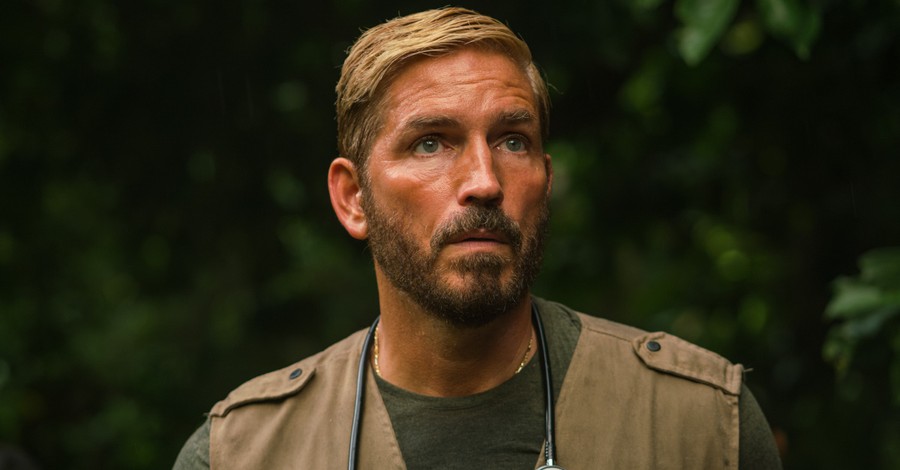
Jim Caviezel: Sound of Freedom Could Be the Uncle Tom's Cabin of the 21st Century

Jim Caviezel:  Sound of Freedom  Could Be the  Uncle Tom's Cabin  of the 21st Century Actor Jim Caviezel says a new movie that hits thea...