Saturday, 21 September 2013


Wednesday, 14 August 2013
Boko Haram Storms Mosque, Kills 56 in 'Baffling' New Attacks
Islamic terrorist group Boko Haram has killed at least 56 people in a new wave of attacks in Nigeria, including 44 worshipers who were slain at a mosque in Konduga – actions which some analysts have described as "baffling."

"We believe the attack was not unconnected with the cooperation residents are giving to security operatives in identifying and arresting Boko Haram members in their midst."
The attack on Aug. 10 at the mosque left 44 people dead, while another 12 people were killed at the nearby Ngom village a day later.
"If this was Boko Haram, it might appear baffling. Many churches have been bombed but why would a group that wants to impose Islamic law across Nigeria open fire on worshipers at a mosque?" BBC News Nigeria correspondent Will Ross asked, while noting that the armed gunmen might have believed the vigilantes opposed to their mission were praying there.
Boko Haram, whose name means "Western education is a sin," has killed thousands of people over the last few years. The extremist organization has heavily targeted Christian churches and their congregations, bombing worship buildings and killing pastors in plain sight. They have made it clear that their mission is to drive out Nigeria's Christians and establish Islamic law to rule over the African country, which is divided between geographic and religious lines.
"We have killed countless soldiers and we are going to kill more," Abubakar Shekau, Boko Haram's leader, explained in a video in which he claimed responsibility for the attacks, reported.
President Goodluck Jonathan has urged the Nigerian army to do all it can to counter Boko Haram's attacks, though Shekau claimed the group's strength has not been dented and it will continue in its mission.
"A lot has been said against us: that we are finished, they have finished with us. All these are lies," the Islamic leader continued. "We are alive. Nobody killed us, and we shall continue to kill until Boko Haram is accepted by the people."
AFP reported that the military has encouraged the formation of the vigilante groups who seek to help in the arrests of Boko Haram members, and they have been credited for reducing the number of attacks – though fears remain that the situation could lead to even more violence, such as the deadly attack on the Konduga mosque.
"Three months ago the military campaign was launched," BBC's Ross continued. "But the Islamist militants have not been defeated - over the past month more than 160 people have been killed in attacks on boarding schools, army and police bases as well as a Christian-dominated area of Kano City. Other attacks go unreported. So what is the way forward?"
Earlier this month, the prosecutor of the International Criminal Court (ICC) noted that Boko Haram is being accused of possible crimes against humanity over the death of thousands of Christians and Muslims in the African nation.
"The information available provide a reasonable basis for believing that in July 2009 Boko Haram launched a widespread and systematic attack that resulted in the deaths of 1,200 civilians, Muslims and Christians in different parts of Nigeria," wrote Fatou Bensouda, prosecutor of the ICC in a report.
Thursday, 30 May 2013
GENDER DOESN'T MATTER
 Amanda Duffy
.
Men Are Fitter
Owen Strachan is a contributing writer for the Gospel Coalition and
executive director of the Council for Biblical Manhood and Womanhood.
Recently, the Marine Corps Gazette
published a bold op-ed on a hot topic: women in combat. This essay was
not written by a patriarchal jarhead, however. It was authored by Katie
Petronio, Marine captain.
Petronio, a former college hockey player, shared that after five months
on the frontlines in Afghanistan, "I had muscle atrophy in my thighs
that was causing me to constantly trip and my legs to buckle with the
slightest grade change." Eventually, Petronio lost 17 pounds and was
diagnosed with polycystic ovarian syndrome. She concluded, "There is no
way I could endure the physical demands of the infantrymen whom I worked
beside."
This experience confirms the fears of evangelicals who have concerns
about women in combat. Scripture teaches that woman was made from man, a
truth that grounds her dependence on him (Gen. 2:21-22). It details how
Adam failed to own this responsibility and protect his wife. For this
reason, God addressed him first after the forbidden fruit was eaten:
"Where are you?" (Gen. 3:9). Adam was a self-crippled man.
This tragic pattern continues in different places in biblical history,
leaving courageous godly women like Deborah and Jael to lead in place of
men. When Barak quails at the thought of battle against the Canaanites,
Deborah promises that this abdication "will not lead to your glory, for
the Lord will sell Sisera into the hand of a woman" (Judges 4:9, ESV).
We hear her scorn loud and clear, even as we hear the pounding of Jael's
tent peg into Sisera's skull (4:21).
David, whose kingship begins with his stunning defeat of Goliath, is
supported during his reign by his "mighty men," something of an
Israelite SEAL Team Six (1 Chron. 11:10-47). David's sacrificial valor
anticipates the warrior-savior, Jesus Christ, whose death on behalf of
his people was an act of war against Satan (Isa. 53; Eph. 4:8). Jesus
was a self-sacrificial man.
Men receive their marching orders from this Christlike example. Paul
teaches that husbands "ought to love their wives as their own bodies."
In these and other texts, we see that the Bible consistently shows men
protecting women, whether in home, church, or broader society.
The Bible teaches textually what common sense tells us naturally—and
physiological study confirms scientifically. According to scientists
Anne and Bill Moir, authors of Why Men Don't Iron,
men are generally larger, stronger, and faster, and have greater lung
capacity, a faster metabolism, and roughly 11 times the testosterone of
women. God's design for men and women is good. We ignore it at our own
peril.
If men will not own this responsibility, then women will be forced to
take it on as did biblical women such as Deborah and Jael (and the
extrabiblical figure Judith). Many modern men fail to mirror Christ in
leading, providing, and protecting. In the cries of fatherless children,
the strained voice of working mothers desperately seeking "work-life
balance," and the Marine Corps Gazette, we hear echoes of the Bible's first question, addressed to a self-crippled man: "Where are you?"
Gender Doesn't Matter
.
THE GOLDEN FISH

Is
it possible for one's life to change literally overnight? In 1988 I had
a dream in which God spoke to me in what I have come to call "the
secret vocabulary of my heart." The next morning, all was new and
newness. Perhaps even newness-ness.
I had the dream around my 25th birthday, and if someone had
investigated my life at that time to determine who I was, they'd likely
have settled on three themes at the heart of my identity: first, that I
am Greek; second, that I loved freshwater fishing; and third, that I was
deeply committed to the life of the mind and the search for meaning.
My parents are European immigrants (my dad is from Greece, my mother
from Germany) who came to New York in the mid-1950s, met in an English
class in Manhattan, and married. I came into the world in 1963 at
Astoria General Hospital, and attended a Greek Orthodox parochial school
through fourth grade. In 1972, we moved to the relatively rural
environs of Danbury, Connecticut, where I went to a public school and
attended the Greek Orthodox church every Sunday.
Greeks in America prize their Greekness, and perhaps because I am only
half-Greek, it was especially important for my dad to instill this in
me. Once, when he saw the chrome fish on the back of a car, he was
excited to explain that this was from the Greek word ixthys, meaning "fish," because the early Christians used this word as an acronym—Iesus Xristos THeos Ymon Sotir. It stood for Jesus Christ Son of God Our Savior. It was their secret symbol.
My only hobby besides watching television was freshwater fishing. I
fly-fished, sometimes tying my own flies. I fished for bass, once in a
tournament, and of course I ice-fished a few times too.
As an undergraduate at Yale I was exposed to the intellectual life, and
I half-heartedly attempted to divine the meaning of life, with mixed
results. My Christian faith was essentially nominal; I never took
seriously the idea that our lives are meaningless, but neither did I
settle on any particular alternative.
Sometime after graduation I came up with a kind of answer, involving
the symbolic image of drilling through ice on the surface of a lake. It
was a vaguely Jungian/Freudian idea that said the goal of life and all
religions was to drill through this ice, which represented the conscious
mind, in order to touch the water beneath, which represented Jung's
"collective unconscious"—a vague "God force" that somehow connected all
of humanity. It was an Eastern and impersonal idea of God, making no
particular moral claims on anyone. How one went about doing any of this
was anybody's guess.
Graduation itself was like stepping off the top of the ladder I'd been
climbing my whole life. Good grades got me to Yale and through Yale. I
majored in English, edited the Yale humor magazine, worked in the dining
hall, and sang in some musicals. At graduation I was Class Day speaker,
preceding the main speaker—my future friend, talk-show host Dick
Cavett—and I received several awards for my short fiction. What but
success could lie ahead?
Instead I was launched into a step-less void, unable to climb toward
what I thought I'd wanted to achieve, which was success and acclaim as a
fiction writer. For the next few years I tried, mostly in vain, to
write short fiction, and eventually sold some literary humor pieces to The Atlantic.
I spent aimless and unproductive months at the elite writers' colonies
of Yaddo and MacDowell in New York and New Hampshire, respectively. I
lived in sublets in the Boston area and clung to a sad relationship. You
might say that I floated and drifted, which inescapably and inevitably
leads to that singularly humiliating cul-de-sac of moving back in with
one's parents.
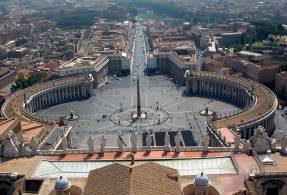
Pope Francis Promises Redemption for Do Gooders?
 VATICAN CITY
– As part of his homily Wednesday, Pope Francis said that the Blood of Christ promised redemption for everyone engaged in doing good works, including atheists, according to Vatican Radio.
"The Lord has redeemed all of us … with the Blood of Christ. All of us, not just Catholics. Everyone! 'Father, the atheists?' Even the atheists. Everyone!"
According to the Pocket Catholic Dictionary, redemption is the salvation of all humanity through Christ who bought back (redeemed) captive humanity from sin, paying the ransom by His suffering and death on the Cross.
But for many Christians, although Christ's sacrifice is sufficient for all, it's only efficient for those who actually accept it: until that acceptance, it's just an offer, not a guarantee.
Francis, however, emphasized the duty of doing good because it unites all humanity.
"We all have a duty to do good. And this commandment for everyone to do good … is a beautiful path towards peace. If we, each doing our own part … do good to others, if we meet there, doing good, and we go slowly, gently, little by little, we will make that culture of encounter. We need that so much. We must meet one another doing good.
"'But I don’t believe, Father, I am an atheist!' But do good: we will meet one another there."
The Catechism of the Catholic Church states that goods works can be a means of sanctification (2427) and that any work united to Christ can be redemptive (2460) by rewarding the effort spent in co-operating with grace in order to be delivered from sin.
But even if doing good unites us all (somewhere), according to St. Paul, we're still saved by grace through faith apart from doing good works, lest anyone should boast (Ephesians 2:8-9).
Please do you agree with this ?
Tuesday, 9 April 2013
KENYATTA SWORN-IN AS KENYA PRESIDENT
Uhuru Kenyatta sworn in as Kenyan president
Mr Odinga did not attend the ceremony after his attempt to overturn Mr Kenyatta's victory in court failed.
Mr Kenyatta and his deputy, William Ruto, face charges at the International Criminal Court relating to post-election violence five years ago.
They were on opposite sides at the time and both deny the accusations.
Sudanese President Omar al-Bashir, who faces an ICC arrest warrant over the conflict in Darfur, was not in Nairobi for the inauguration.
Mr Kenyatta is the son of Kenya's founding father, Jomo Kenyatta, and is heir to one of the largest fortunes in Kenya.
In his inaugural address, Mr Kenyatta said he would govern for all Kenyans.
"We will leave no community behind... Where there's disillusionment, we'll restore hope," he said.
The new government would abolish maternity fees in its first 100 days and children starting school next year would be given laptops, he added.
In an apparent reference to the ICC case against him, he said: "I assure you again that under my leadership, Kenya will strive to uphold our international obligations, so long as these are founded on the well-established principles of mutual respect and reciprocity."
US and European diplomats attended the inauguration, despite warning before the election that they would have limited contact with Mr Kenyatta if he is voted into office.
'Blackmail' Among the African leaders present for the inauguration were South Africa's Jacob Zuma, Nigeria's Goodluck Jonathan and Uganda's Yoweri Museveni.
Mr Odinga - the outgoing prime minister - did not attend the ceremony, choosing to be on holiday in South Africa instead.
Other senior members of his Coalition for Reforms and Democracy (Cord) party have also stayed away to signal their opposition to Mr Kenyatta's presidency, correspondents say.
According to official results, Mr Kenyatta beat Mr Odinga by 50.07% to 43.28% in March, avoiding a run-off by just 8,100 votes.
Mr Odinga challenged the result, but said he would respect the Kenyan Supreme Court's ruling in Mr Kenyatta's favour.
The election was Kenya's first after a disputed poll in 2007, which led to violence that left more than 1,200 people dead.
Mr Kenyatta is due to appear at the ICC for his trial in The Hague later this year, accused of crimes against humanity. He denies the charges.
Kenya is a party to the Rome Statute, the treaty which established the ICC in 2002.
But like most African countries, it has refused to enforce the ICC warrant for Mr Bashir's arrest.
Earlier, Kenyan government spokesman Muthui Kariuki told the BBC that Mr Bashir had been invited and would not be arrested if he accepted the invitation.
After Mr Bashir visited Kenya in 2010, a Kenyan court ruled that the government must arrest him if he returned, in line with its international obligations under the Rome Statute.
The government is appealing against the ruling.
Thousands watched as Mr Kenyatta was sworn in as president
Uhuru Kenyatta has been sworn in as Kenya's new president, following his victory in March against Raila Odinga.
Dignitaries and tens of thousands of people witnessed the inauguration at a stadium in the capital, Nairobi. Mr Odinga did not attend the ceremony after his attempt to overturn Mr Kenyatta's victory in court failed.
Mr Kenyatta and his deputy, William Ruto, face charges at the International Criminal Court relating to post-election violence five years ago.
They were on opposite sides at the time and both deny the accusations.
Sudanese President Omar al-Bashir, who faces an ICC arrest warrant over the conflict in Darfur, was not in Nairobi for the inauguration.
Mr Kenyatta is the son of Kenya's founding father, Jomo Kenyatta, and is heir to one of the largest fortunes in Kenya.
As Uhuru Kenyatta took the oath of office it was both a new beginning and, in a sense, a continuation of the past.
He is the first president to be elected under Kenya's new constitution, which it is hoped, will put an end to the fierce tribalism that has bedevilled Kenyan politics. The fact that last month's poll passed off largely peacefully is perhaps a sign of its success.
But Mr Kenyatta is also very much of the established order, the son of Kenya's founding father, and one of the country's richest men. His challenge will be to persuade the nation that he will govern for "all Kenyans," and not just an ethnically based elite.
He could become the first sitting head of state to appear in the dock at The Hague. But with the case against his co-accused collapsed, he is likely to begin his presidency in a confident mood.
He is the first president to be elected under Kenya's new constitution, which it is hoped, will put an end to the fierce tribalism that has bedevilled Kenyan politics. The fact that last month's poll passed off largely peacefully is perhaps a sign of its success.
But Mr Kenyatta is also very much of the established order, the son of Kenya's founding father, and one of the country's richest men. His challenge will be to persuade the nation that he will govern for "all Kenyans," and not just an ethnically based elite.
He could become the first sitting head of state to appear in the dock at The Hague. But with the case against his co-accused collapsed, he is likely to begin his presidency in a confident mood.
He served as deputy prime minister, minister for trade, and finance minister under outgoing President Mwai Kibaki
The crowd, waving Kenyan flags, burst into rapturous welcome
as the 51 year old took the oath of office, becoming Kenya's youngest
president.In his inaugural address, Mr Kenyatta said he would govern for all Kenyans.
"We will leave no community behind... Where there's disillusionment, we'll restore hope," he said.
The new government would abolish maternity fees in its first 100 days and children starting school next year would be given laptops, he added.
In an apparent reference to the ICC case against him, he said: "I assure you again that under my leadership, Kenya will strive to uphold our international obligations, so long as these are founded on the well-established principles of mutual respect and reciprocity."
US and European diplomats attended the inauguration, despite warning before the election that they would have limited contact with Mr Kenyatta if he is voted into office.
'Blackmail' Among the African leaders present for the inauguration were South Africa's Jacob Zuma, Nigeria's Goodluck Jonathan and Uganda's Yoweri Museveni.
Mr Museveni told the cheering crowd that he wanted to applaud Kenyans for rejecting the "blackmail" of the ICC.
He supported the ICC when it was formed, but it was now being
used by "arrogant actors" who were trying to "install leaders of their
choice in Africa and eliminate those they don't like", he said. Mr Odinga - the outgoing prime minister - did not attend the ceremony, choosing to be on holiday in South Africa instead.
Other senior members of his Coalition for Reforms and Democracy (Cord) party have also stayed away to signal their opposition to Mr Kenyatta's presidency, correspondents say.
According to official results, Mr Kenyatta beat Mr Odinga by 50.07% to 43.28% in March, avoiding a run-off by just 8,100 votes.
Mr Odinga challenged the result, but said he would respect the Kenyan Supreme Court's ruling in Mr Kenyatta's favour.
More than 60,000 people witnessed the colourful ceremony in Nairobi
Mr Kenyatta is due to appear at the ICC for his trial in The Hague later this year, accused of crimes against humanity. He denies the charges.
Kenya is a party to the Rome Statute, the treaty which established the ICC in 2002.
But like most African countries, it has refused to enforce the ICC warrant for Mr Bashir's arrest.
Earlier, Kenyan government spokesman Muthui Kariuki told the BBC that Mr Bashir had been invited and would not be arrested if he accepted the invitation.
After Mr Bashir visited Kenya in 2010, a Kenyan court ruled that the government must arrest him if he returned, in line with its international obligations under the Rome Statute.
The government is appealing against the ruling.
Subscribe to:
Posts (Atom)
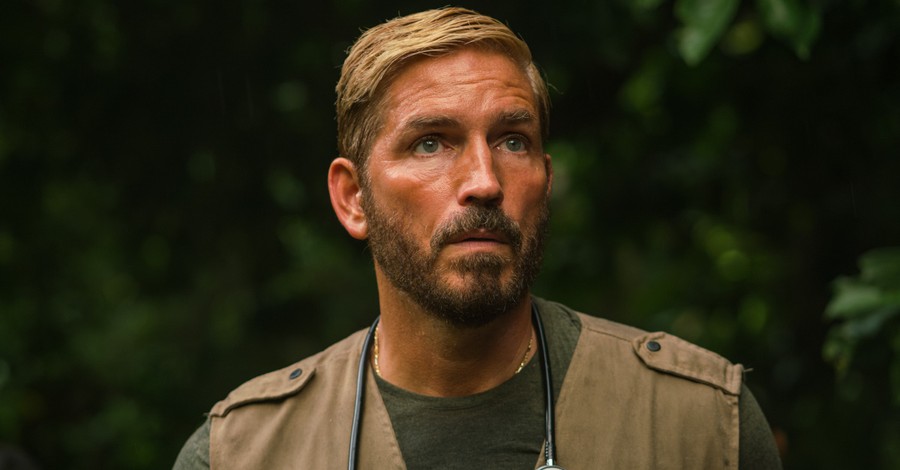
Jim Caviezel: Sound of Freedom Could Be the Uncle Tom's Cabin of the 21st Century
Jim Caviezel: Sound of Freedom Could Be the Uncle Tom's Cabin of the 21st Century Actor Jim Caviezel says a new movie that hits thea...
-
 Forbes releases its list of the richest pastors in Africa, Below are the 5 richest pastors in africa. 1. Bishop David Oyedepo David O...
 -
How to Start a High-Impact Mentoring Program Looking to start a mentoring program? That’s great. Mentoring is a proven approach to d...
-
 Business leaders often wonder where they can find the best business advice and counsel in order to build their business. Although good busin...
