Thursday, 11 August 2016

Faith, Family Fuel Simone Biles' Olympic Run, as Team USA's "Final Five" Capture Gold in Rio

Faith, Family Fuel Simone Biles' Olympic Run, as Team USA's "Final Five" Capture Gold in Rio 

Biles and her teammates Gabby Douglas, Aly Raisman, Madison Kocian, and Laurie Hernandez [together won Team Gold with a collective score of 8.209 points on Tuesday night in Rio].
Simone Biles is the picture of beauty and grace in Olympic gymnastics competition in Rio de Janeiro. Along with her coaches, even her competition has called her "the best ever," "the perfect 10," and "the best gymnast in history." (Photo via CBN News)
But Biles' road to Rio was far from easy. She and her sister, Adria, were born in Columbus, Ohio, to drug-addicted parents. They had no relationship with their father and their mother was in and out jail, ultimately losing custody of both of them.
The two girls bounced between foster homes until Simone was 6 years old. In an interview with Texas Monthly, Biles recalled one foster home even had a trampoline, but she was not allowed to play on it.

The foster home bouncing settled when Simone's grandparents, Ron and Nellie Biles, officially adopted the two girls and relocated them to their home in Spring, Texas. (Photo courtesy of the Biles family/via TexasMonthly.com)

Ron and Nellie introduced Simone to gymnastics. After a year at a Texas gym, trainer and former competitive gymnast, Aimee Boorman noticed Simone's gift.

Since that moment, Boorman has guided Simone's meteoric rise.

Simone's grandparents also legally adopted the two girls and introduced them to the Christian faith. Faith and family have kept Biles grounded along her journey to becoming the "best athlete in the world."

Biles told US Weekly, "My mom, Nellie, got me a rosary at church. I don't use it to pray before a competition. I'll just pray normally to myself, but I have it there in case."

Since 2013, Biles has earned 10 World Championship gold medals, two Pacific Rim Championship golds, and the all-around gold at the 2015 American Cup. (Photo "the Final Five"/via Fox Sports)

At 19, she is also the first woman to win three consecutive all-around World Championship titles.

The three-time world champion led the way in the all-around competition in the Olympic gymnastics preliminaries Sunday.

Biles and her teammates Gabby Douglas, Aly Raisman, Madison Kocian, and Laurie Hernandez, [together won Team Gold with a collective score of 8.209 points on Tuesday night in Rio].


Steele Johnson and David Boudia Have Faith in Their Diving

On Monday night, Boudia and Johnson won silver in the men's synchronized 10-meter diving event. The Christian Examiner reports that the two divers proclaimed their faith in their post-dive interview. Both men said their Christian faith gives them perspective and allows them to enjoy their sport without allowing themselves to be defined by it.

Steele Johnson almost died on the diving platform.
In 2009, at age 12, he was practicing his favorite dive, a triple reverse somersault in a tuck position — watch for him to ace it in the men’s individual platform diving in Rio — when he cracked his skull on a concrete platform, sliced open his scalp and fell 33 feet into the pool.
His coach pulled him out and held his head together all the way to the hospital. Today, he still has some memory loss.
But Johnson, a Christian, has spoken of how his faith helped him recover and placed him in medal contention in Rio.
“I wanted to be the kid that had the big injury and came back from it and made the Olympics and all that stuff,” Johnson told the Indianapolis Star in June. “So it’s kind of embarrassing. But now I’ve kind of realized that God had his hand over all of it to help me come to the realization, like, that’s not why at all.
“He gave me this ability to dive,” Johnson said. “ … God kept me alive and he is still giving me the ability to do what I do.”
At the Rio Olympics, he will compete in the 10-meter men’s synchronized platform diving with David Boudia, a three-time Olympian and a fellow Christian.
In July, when the pair qualified for the Olympics — Johnson’s first and Boudia’s third — Johnson was so overwhelmed he doubled over with emotion before getting out of the pool.

“It’s cool because this is exciting, this is fun, but this is not what my identity will be for the rest of my life,” a dripping Johnson told NBC Sports. “Yeah, I’m Steele Johnson the Olympian, but at the same time I’m here to love and serve Christ. My identity is rooted in Christ, not in the flips we’re doing.”

Boudia, who is six years older than Johnson, also said his diving is driven by his faith.
“We can’t take credit for this,” Boudia told NBC Sports. “To God be the glory.”
Of the pair, Boudia has the most experience in talking publicly about the connection between his faith and his sport. He has written an entire book about the subject, “Greater Than Gold: From Olympic Heartbreak to Ultimate Redemption,” that hit stores a few days before the Olympics began.
In it, he tells how he went from a not particularly observant Catholic upbringing to evangelical Christian through the help of his Perdue University diving coach, Adam Soldati.

“I am not a diving coach who happens to be a Christian,” Soldati said in a talk he gave at his church just after the close of the 2012 London Olympics, where Boudia won a gold medal. “But rather I am a Christian, follower of Christ who happens to be a diving coach.”
In his book, Boudia talks about how he was engaged in “a destructive lifestyle” at Perdue and sought his coach’s guidance. He credits his gold medal to his conversion to evangelical Christianity.

“Whatever happens at the end of this Olympic Games is completely out of my control,” Boudia said in 2012. “God is totally sovereign over everything.”
Read more »

Evangelical Archer Mackenzie Brown Takes Aim at First Olympics

Mackenzie Brown may be the only woman on Team USA’s archery squad, but she is just one of the guys in another way: Like her coach and many of her fellow bowmen, Brown, 21, is an evangelical Christian.
 
“I am so beyond ecstatic to be going to Rio this summer for the Olympic Games!!” Brown said in a tweet after qualifying for the team in July. “I’m so grateful for all of the support and love from y’all! God is so good all the time!”
 
No one doubts Brown’s right to a place on the team — she is ranked fourth in the world. But it has refocused attention on Team USA’s archery coach, Kisik Lee, who has come under scrutiny in the past for blending his Christianity with his coaching.
 
He has been involved in the baptism of at least seven Olympic-bound archers, including 2016 team member and 2010 silver medalist Brady Ellison. At the 2008 Olympics in Beijing, Lee reportedly ran a morning hymn-sing and Bible study and regularly worshipped with athletes at the interfaith center.
 
“I just want to show them who I am,” Lee told The New York Times in 2008. “I’m the witness of Jesus, not just an instructor. So I have to encourage them how, how we can change in Christ.”
 
In 2007, Lee was warned by United States Olympic Committee officials to separate his evangelism from his coaching. He reportedly no longer holds Bible study classes at the sport’s Chula Vista, Calif., training center, where athletes come to live and train. His personal website has numerous references to his faith and draws links between religious faith and performance.
 
Christianity has long been associated with archery. A verse in Genesis reads, “And God was with the lad; and he grew, and dwelt in the wilderness, and became an archer.” Many archers compete with Genesis brand bows, many participate in Christian archery ministries such as On Target for Christ, and there is even an archery program at the Creation Museum in Kentucky.
 
So Brown should fit right in.
 
“There is nothing better than seeing your kid do something that she loves,” her mother, Stacey Brown, told the Tyler (Texas) Morning Telegraph. “This is a God-given ability she has.”
Read more »

Olympic Gymnast Simone Biles Brings Prayer to Rio

On the seventh day, Simone Biles rests.
 
That’s the day the world gymnastics champion, who has a clear shot at the medal podium in Rio, goes to church with her family.
 
Biles, a first-time Olympian, is a Catholic. She has said she routinely lights a candle to St. Sebastian, the patron saint of athletes and of Rio, before each meet.
 
Faith has been a constant in what has otherwise been a challenging young life. Biles, 19, and her three siblings were born in Ohio, but their mother was addicted to drugs and they were adopted by their grandparents in Texas after they were placed in foster care.
 
Today, she calls her grandparents “mom and dad” and attends church with them when she’s not at a meet. She is a four-time national champion and a three-time world champion.
 
Biles’ path to Rio has had hiccups. In 2013, she faltered badly at the U.S. Classic gymnastics meet, falling, stumbling, twisting her ankle and eventually withdrawing.
 
“I felt like my life was going down the drain,” she told Texas Monthly magazine earlier this year.
 
And while Biles is less public about her faith than some other current and past gymnastics team members — Shawn Johnson, who competed in Beijing and London, and Gabby Douglas, who returns to Rio for her second Olympics — her faith was likely a touchstone in her turnaround.
 
When Us magazine recently asked Biles to upturn and dump her gym bag for a photo, there, between the lip balm and the bottled water and the bobby pins was a white rosary.
 
“My mom, Nellie, got me a rosary at church,” she told the magazine. “I don’t use it to pray before a competition. I’ll just pray normally to myself, but I have it there in case.”
Read more »

Catholic Faith Anchors Olympic Swimmer Katie Ledecky

Katie Ledecky has no obvious physiological advantages as a swimmer.
At 6 feet, the second-time Olympian is not extraordinarily tall compared with her peers. She has no long torso, no wide wingspan like Michael Phelps.
What she has, as The Washington Post recently pointed out, is “a strong core.”
And that’s not just her muscular middle, but also the foundation of her tight family and strong Catholic faith.
“My Catholic faith is very important to me. It always has been and it always will be. It is part of who I am and I feel comfortable practicing my faith,” she told the Catholic Standard.
Ledecky surprised the world when — at age 15 and as the youngest member of the U.S. Olympic team — she won the gold medal in the 800-meter freestyle at the 2012 Summer Olympics in London, setting a new U.S. record.
Now 19 and a multiple world record-holder, she has obliterated her own world record to win gold in the 400-meter freestyle and won silver as part of the 4×100-meter freestyle relay at the 2016 Rio Games. She’s still scheduled to compete in the 200- and 800-meter freestyles.
And she’ll say a prayer before each event, according to the Catholic Standard.
“I do say a prayer — or two — before any race. The Hail Mary is a beautiful prayer and I find that it calms me,” she said.
Ledecky attended Catholic schools through high school, first at Little Flower School, then Stone Ridge School of the Sacred Heart, both in Bethesda, Md. Her godfather Fr. Jim Shea, S.J., and several Stone Ridge teachers cheered her on at the Olympic Trials this year, and many more former classmates and teachers sent supportive messages, according to the Catholic Standard.
She had returned their support after the London Games, joining her high school swim team and visiting the Immaculate Heart of Mary sisters in Bethesda, bringing them brownies and letting them wear her medal, according to Crux.
“I feel that I have very special people in my life and, because of that, I feel very fortunate,” she said.
Read more »

Olympic Track and Field athlete Allyson Felix says that her faith in Christ is what governs all aspects of her life.


Olympic Track and Field athlete Allyson Felix says that her faith in Christ is what governs all aspects of her life.
The Christian Examiner reports that the 30-year-old Felix will compete in a number of races in the second week of the Rio Olympic Games.
Although Felix is a celebrated runner and has won six world championships, she suffered a number of setbacks this past year, including the loss of her grandfather and a hamstring injury that prevented her from making the women’s 200 meters team.
Felix said that she is able to keep going despite these setbacks because of her faith.
"Faith leads my life," she told the LA Times. "I definitely feel like I've been blessed with this gift, and so that's something that helps me to see the bigger picture. It's so easy to get caught up in winning everything and just the kind of the grind of what professional sports is, but it definitely helps me to kind of pull back and see that there's a greater purpose."
Felix said she grew up in a Christian home and gave her life to Christ at a young age.
"Our family was very involved in our church. I am so blessed to have my family and the upbringing that I did. It means so much to me to have two very godly parents who both have so much wisdom. They are amazing role models that I have had the privilege to watch as I grew up," Felix shared.
She also shared that when she feels anxious about competing, she relies on Philippians 4:6-7 which reads:
"Do not be anxious about anything but in every situation, by prayer and petition, with thanksgiving, present your requests to God. And the peace of God, which transcends all understanding, will guard your hearts and your minds in Christ Jesus."
Read more »

Friday, 9 October 2015

How to Start a High-Impact Mentoring Program

How to Start a High-Impact Mentoring Program


Looking to start a mentoring program? That’s great. Mentoring is a proven approach to drive rich learning and development for both men tees and mentors. Mentoring also benefits the sponsoring organization.
Start a mentoring program with five steps: design, attract, connect, guide, measure
For employers, mentoring increases retention, promotion rates, and employee satisfaction. At universities, student mentoring is proven to improve student retention, boost job placement rates, and increase alumni engagement when tapping alumni as mentors.
A thriving, impactful mentoring program is within your reach. But great mentoring programs don’t just happen. They are built through thoughtful planning and sustained commitment to guiding participants through the mentoring process while continually improving the program.
Sound like a lot of work? It can be, but the right tools will make the effort much easier. Mentoring software provides a complete program environment that helps organizations start, manage, and measure all types of mentoring programs.
Here are the five key tips for starting a successful mentoring program.

1. Design Your Mentoring Program

The starting point for any mentoring program begins with two important questions:
  1. Why are you starting this program?
  2. What does success look like for participants and the organization?
To answer these questions you will need to dive deep to understand your target audience. Make sure you understand who they are, where they are, their development needs, and their key motivations to participate. Translate your vision into SMART objectives: specific, measurable, attainable, relevant and time-bound. Objectives provide direction to program participants, establish program key performance indicators (KPIs), and help organizational leaders understand why they should offer their support.
Successful mentoring programs offer both structure and flexibility. Structure provides participants a mentoring workflow to follow and is critical to help participants achieve productive learning that reaches defined goals. Similarly, flexibility is essential to support varying individual mentoring needs across specific learning goals, preferences, and learning style.
Key design decisions include:
  • Enrollment – is it open, application, or invite only?
  • Mentoring style – can be traditional, flash, reverse
  • Connection type – possibly 1:1, group, or project
  • Connection duration – typically weeks or months, or perhaps even just a single session
  • Community/social aspects beyond formal mentoring, tracking and reporting needs.
A good idea is to create a program workflow diagram to explain each step of your program. You can provide details such as key actions, timeframes, support resources, and criteria for moving to the next phase. Mark areas that will require some flexibility to support user needs.
Mentoring software allows you to deliver a wide-variety of mentoring programs. Regardless if a small or large program, mentoring software is easy to configure and will save you time and cost in getting your program started and running smoothly.


See how software walks you through configuring a program

2. Attract Participants for Your Mentoring Program

The best designed mentoring programs won’t get far without effective program promotion, mentor recruitment, and training.
When new mentoring programs are introduced in organizations, there is generally natural enthusiasm. Yet this enthusiasm doesn’t always translate into high participation rates. A common reason is the absence of effective promotion. Don’t assume potential mentors and mentees understand the benefits. For many, this will be their first opportunity to participate in mentoring. You will need to convince them that participating is worth their time and effort. Beyond participants, key leaders and stakeholders will need to be educated on the benefits of the program and strategic value to the organization.
Consider the needs of mentors. Building a solid base of mentors can be a challenge. It is important to understand the positive and negative factors that impact mentor participation. Once you have identified them, look for creative ways to reinforce positive drivers and lower the hurdles of negative ones throughout the mentoring process. For example, mentors are often busy people with limited time to spend. How can you help mentors be more efficient with the time they have to dedicate to mentoring? Also consider recognition and reward strategies. Formally recognizing mentor involvement can be very motivating and help attract additional mentors to the program.
Lastly, productive mentoring doesn’t just happen. Provide training to mentors and mentees regarding the program’s goals, participant roles, mentoring best practices, and your mentoring process. Help mentors and mentees clarify their own objectives. The need for training and guidance doesn’t end after the initial orientation. Provide tips and best practices throughout the mentoring program to help participants stay on track and get the most out of the program.


Attracting Participants Checklist
  • Promote the benefits to participants and stakeholders
  • Consider recognition and rewards for participation
  • Provide training and reinforcement throughout the program
The Chronus mentoring solution provides the best practices, content and infrastructure to recruit, enroll and train program participants.

3. Connect Mentors and Mentees

A productive mentoring relationship depends on a good match.
Matching is often one of the most challenging aspects of a program. Participants will bring various competencies, backgrounds, learning styles and needs. A great match for one person may be a bad match for another.
Matching starts by deciding which type of matching you’ll offer in your program: self-matching or admin-matching. Consider giving mentees a say in the matching process by allowing them to select a particular mentor or submit their top three choices. Self-matching is administrative light, which in larger programs can be a huge plus.
For more structured programs, such as large groups of new students at universities, or groups of new corporate employees, you may want to get the program started by bulk, or admin-matching. Evaluate various match combinations before finalizing as ensuring quality mentors for hard- to-match mentees can be challenging.
3 Steps for a Successful Mentor Matching
  • 3 Steps to Successful Mentor Matching
  • Create user profiles with rich data like gender, college, interests, and job function
  • Decide on your method: self-matching or admin-matching
  • Intelligently match based on profiles, improving match quality while saving time through software
Matching best practices start with a solid profile for all participants (mentors and mentees). Critical profile elements include development goals, specific topical interests, location, experiences, and matching preferences. Think about how you’ll want to match people, or if you’ll want them to save time by having them match themselves. For example, you may want to match female leaders with younger female employees, or experienced sales personnel with new recruits. For self-matching, perhaps participants might like to connect with someone from the same previous employer, or the same college. The more you know about your participants, the better chance your participants will have for a great fit and a happy, productive mentoring outcome.
Regardless if self- or admin-matching, see how Chronus software makes matching faster and easier with strong, intelligent matching capabilities.
View details on how automated matching works

4. Guide Mentoring Relationships

Now that your participants are enrolled, trained, and matched, the real action begins.
It is also where mentoring can get stuck. Left to themselves, many mentorships will take off and thrive. But some may not. Why? Because mentoring is not typically part of one’s daily routine. Without direction and a plan, the mentoring relationship is vulnerable to losing focus and momentum. That is why providing some structure and guidance throughout the mentorship is vital to a successful mentoring program.
One best practice is to ensure all mentorships have goals and action plans. This serves two purposes. First, it brings focus at the onset, which helps a mentorship get off to a good start. Second, it adds accountability to accomplish something.
Provide all mentoring relationships with timely and relevant “help resources” (topical content, mentoring best practices, etc.) throughout the mentorship. Chunk-sized content delivered at key points is ideal.
As a mentoring connection progresses, establish checkpoints where mentorships report on their progress. Even if your organization doesn’t choose to formally track the details, just the act of reporting progress helps mentors and mentees stay productive.
Lastly, have a formal process that brings closure to the mentoring experience. Within this process, provide an opportunity for both the mentor and mentee to reflect upon what was learned, discuss next steps for the mentee, and provide feedback on the benefits of the program and process.
Chronus software makes guiding, or “facilitating,” your program’s mentoring connections very easy and enables your participants to be highly productive.


Learn how guided mentoring can work for you

5. Measure Your Mentoring Program

Understanding how your program measures up to expectations may well be the most important phase of all.
Mentoring is a significant investment when you consider program management, infrastructure, and the valuable time of participants. Articulating the impact is essential to secure ongoing funding and support. In addition, the measure phase is also focused on assessing program health to identify trouble spots and opportunities.
Mentoring programs should be tracked, measured, and assessed at three altitudes: the program, the mentoring connection, and the individual. To be effective you need the ability to capture metrics and feedback throughout the program lifecycle.


Measure mentoring at three levels- individual learning, program health and mentoring connection activity
At the program level, build metrics around defined business objectives. For example, in a diversity mentoring program you may want to compare promotion rates of program participants to non-participants. Also track “funnel” conversion metrics, which show the progress participants make at each step of the mentoring program starting at enrollment. Conversion metrics provide essential insight into program health.
For mentoring connections, you want to understand mentorship behavior to identify roadblocks and opportunities. Common questions you will want to ask are: Is the mentoring timeframe too long, too short, or just right? Are mentorships getting off to fast starts or lagging? Are participants leveraging content resources you have provided?
For participants, you want to understand the impact of mentoring in terms of outcomes while acquiring program feedback. One of the easiest ways to capture outcome and feedback is through surveys. Ask participants and stakeholders how well the mentoring program met their goals and the goals of the organization. Also ask them for their ideas for improving the program
View examples of mentoring program reporting

The Role of Mentoring Software

Mentoring software from ChronusAs a development strategy, mentoring is one of the most effective methods of long-lasting learning. Running an effective mentoring program goes way beyond just matching people up. For true impact on your organization, it takes effort, resources, and know-how. Mentoring software enables you to create a cloud-based program that is easy to use, complete with guided workflows for participants. Plus, for program administrators, mentoring software includes an automated toolset to attract, enroll, connect and guide participants, saving significant administrator time and cost. Finally, software provides measurement tools to ensure your program provides effective learning that you can measure to produce return on investment (ROI) metrics for your program.
For more information on mentoring, contact Chronus. Chronus offers the industry’s leading software solution for mentoring. Hundreds of corporations, government entities, academic institutions and associations rely on Chronus to run easy and effective mentoring, coaching and onboarding programs.
Learn About Mentoring Software
Start you mentoring program with this easy to follow guide

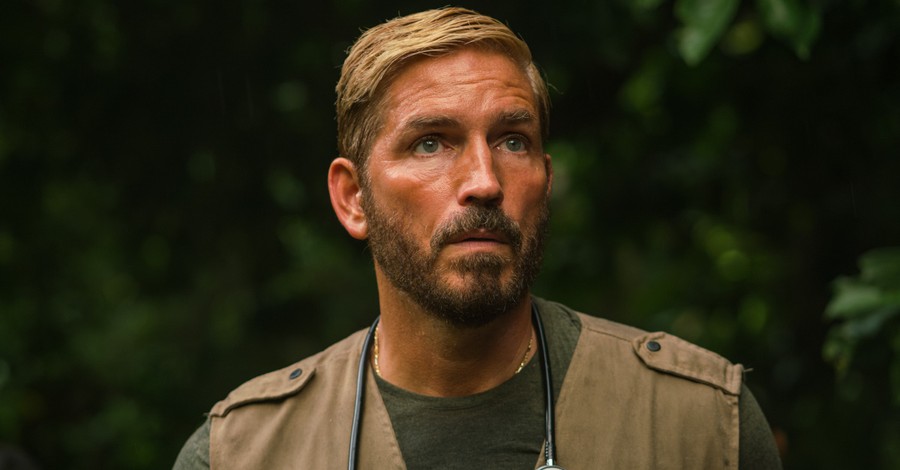
Jim Caviezel: Sound of Freedom Could Be the Uncle Tom's Cabin of the 21st Century

Jim Caviezel:  Sound of Freedom  Could Be the  Uncle Tom's Cabin  of the 21st Century Actor Jim Caviezel says a new movie that hits thea...